What Is IGCSE?
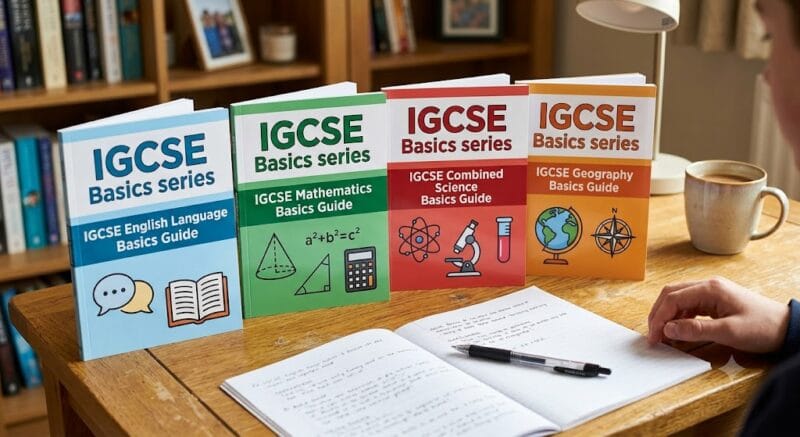
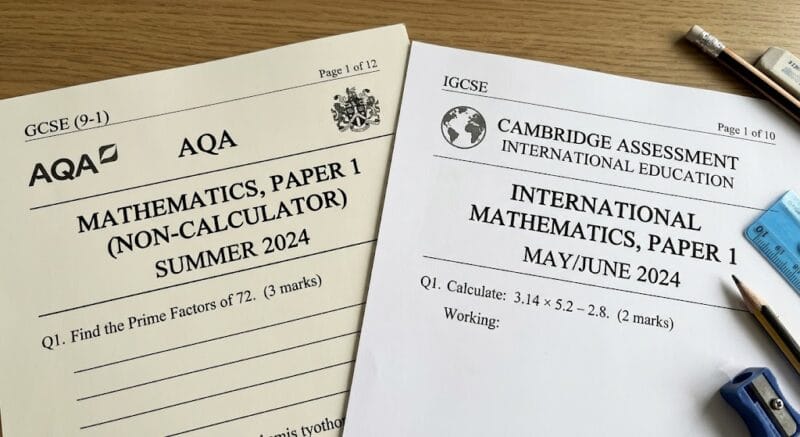
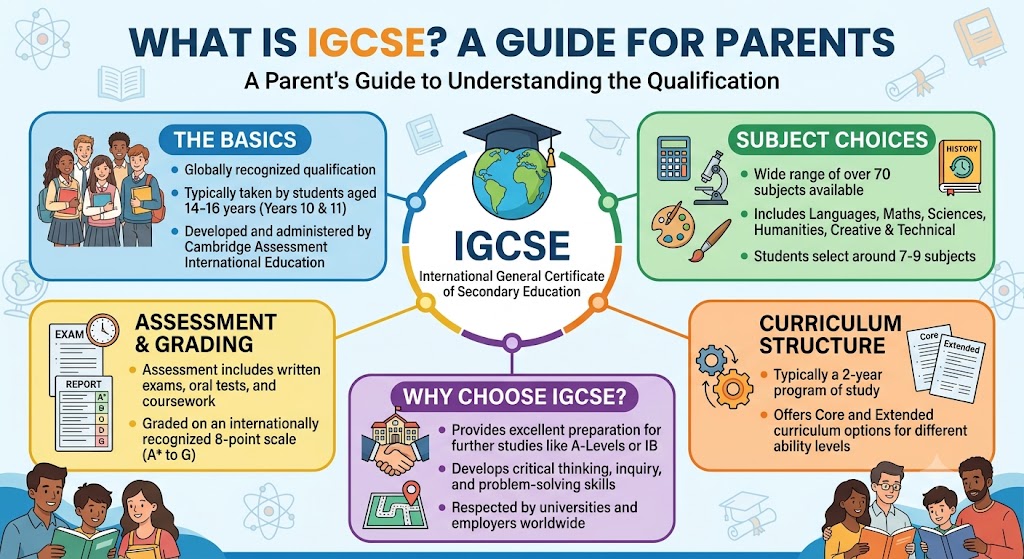
IGCSE stands for International General Certificate of Secondary Education — an internationally recognised qualification usually taken by students aged 14 to 16, sat at the end of a two-year course covering subjects like Mathematics, Science, English and Humanities. It was originally developed by Cambridge, and several boards now offer their own version, including Cambridge itself, Pearson Edexcel, and Oxford AQA.
For Malaysian parents weighing options against the national SPM system, IGCSE is the qualification that sits between Cambridge Lower Secondary (Years 7–9) and the A Level stage, and it’s what most Cambridge-curriculum private and international schools in Malaysia lead toward. For a broader look at the decisions this stage involves, see Aura Tycoon’s guidance for parents navigating the Cambridge pathway. If your child is still working through Lower Secondary, it helps to understand what that earlier stage of the Cambridge pathway actually covers before IGCSE begins.
Who Actually Offers IGCSE?
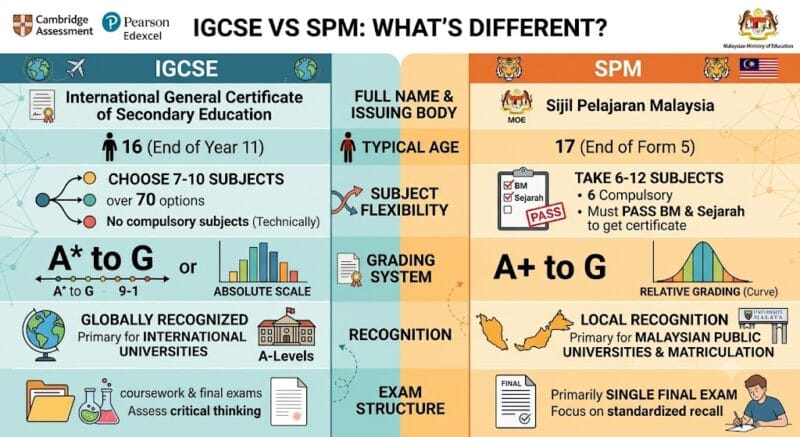
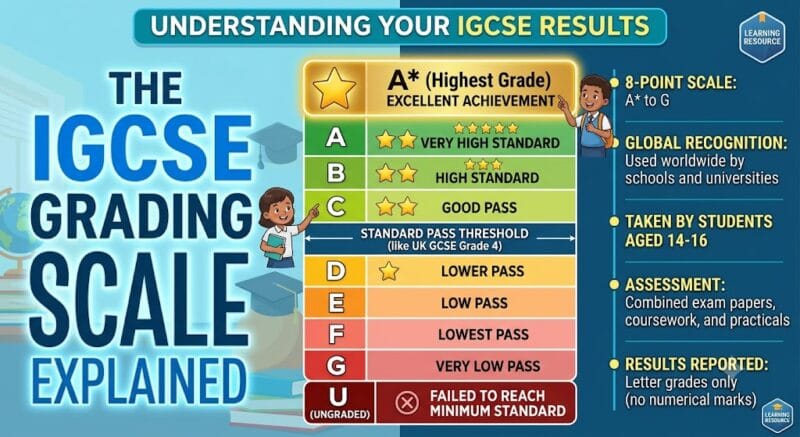
IGCSE isn’t a single exam board’s product — it’s a qualification type that several boards license and administer under their own name. Cambridge International offers the original Cambridge IGCSE, with more than 70 subjects available across 30 languages, according to Cambridge’s own subject listing. Pearson Edexcel and Oxford AQA offer their own International GCSEs, similar in structure but with different syllabus content, grading, and exam sessions.
How Is IGCSE Different From Malaysia’s SPM?
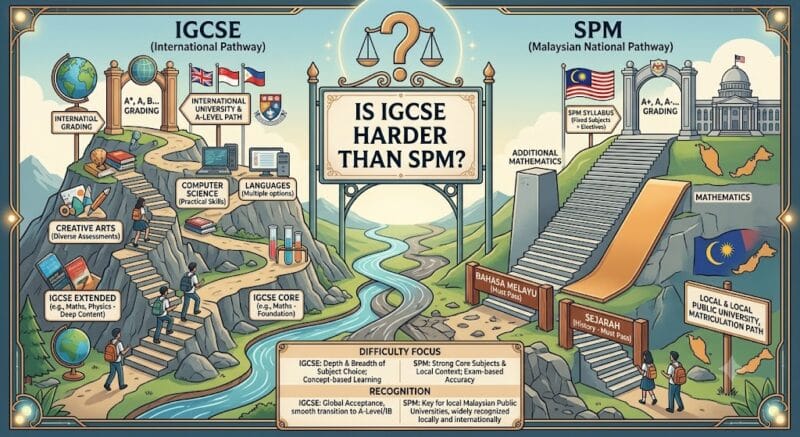
IGCSE is an internationally set qualification taken mainly by students in Cambridge-curriculum private and international schools, while SPM is Malaysia’s national school-leaving exam, sat by government-school students in Form 5 under a syllabus set entirely by the Ministry of Education. The two lead down different paths — IGCSE typically continues to A Levels and international university applications, while SPM continues to Malaysian matriculation, STPM, or local diploma routes.
What Subjects Does IGCSE Cover?
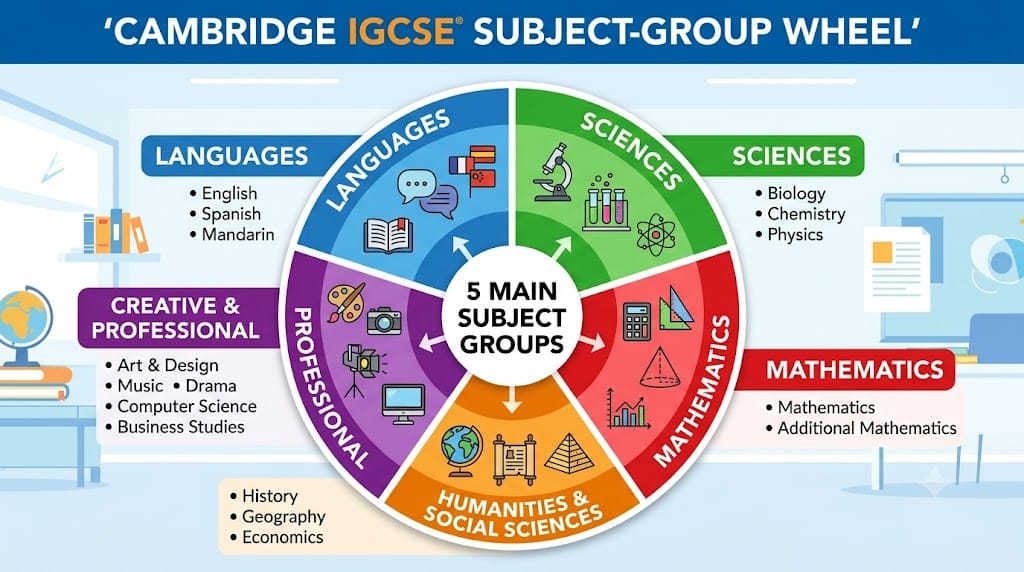
Students typically choose a mix across several subject groups:
- Languages — First Language English, additional languages
- Mathematics — core or extended papers depending on the board
- Sciences — Biology, Chemistry, Physics, taken separately or combined
- Humanities and Social Sciences — Geography, History, Economics
- Creative and Technical — Art, Computer Science, Business Studies
Most schools set a minimum number of required subjects, but there’s flexibility beyond that core.
When Do Students Take IGCSE?
Most students sit IGCSE at the end of Year 11, around age 16, following a two-year course that usually starts in Year 10. Exams run in two main windows internationally — May/June and October/November — and Malaysian Cambridge schools typically follow the May/June series as the primary sitting.
Free practice tool
Aura Tycoon is a completely free, ad-free learning platform for Cambridge-track students, with chapter videos, quizzes, flashcards, and practice questions built into every topic. It offers free Biology, Chemistry and Physics practice with every wrong answer logged by topic — laying the groundwork years before the actual IGCSE papers.
Start Practicing FreeFrequently Asked Questions About IGCSE
What does IGCSE stand for?
IGCSE stands for International General Certificate of Secondary Education, a qualification usually taken by students aged 14 to 16. It was originally developed by Cambridge and is now also offered by other boards.
Is IGCSE the same everywhere in the world?
No — while the qualification type is the same, the specific board (Cambridge, Edexcel, Oxford AQA) sets its own syllabus content, grading scale, and exam sessions. A school's choice of board affects exactly what a student studies and how it's graded.
How long does an IGCSE course take?
Most IGCSE courses run for two years, typically Year 10 and Year 11, ending with final exams. Some schools introduce IGCSE-style content earlier, in Year 9, to ease the transition.
Is IGCSE recognised in Malaysia?
Yes, IGCSE is recognised by Malaysian and international universities alike, and Cambridge-curriculum schools across Malaysia use it as their main upper-secondary qualification. It is not the national government-school qualification, however — that role belongs to SPM.
Do all IGCSE students take the same subjects?
No, students typically choose their subjects from a wide list, though most schools require a core group including English, Mathematics and Science. Beyond that, choices vary based on school offerings and student interest.
What comes after IGCSE?
Most students progress to Cambridge International AS & A Levels, though some pursue the IB Diploma or other post-16 pathways depending on their school and goals. IGCSE results also matter for university applications in some countries.
Can homeschooled students in Malaysia sit IGCSE?
Yes, IGCSE is open to private candidates, unlike Cambridge Checkpoint, which makes it a realistic option for homeschooling families following the Cambridge pathway. Registration usually goes through a Cambridge-approved exam centre.
Is IGCSE harder than other qualifications?
Difficulty is subjective and depends on the student and subject, though IGCSE is generally considered rigorous by international standards. It's better compared subject by subject than judged as uniformly harder or easier than any single alternative.