The IGCSE Grading Scale Explained
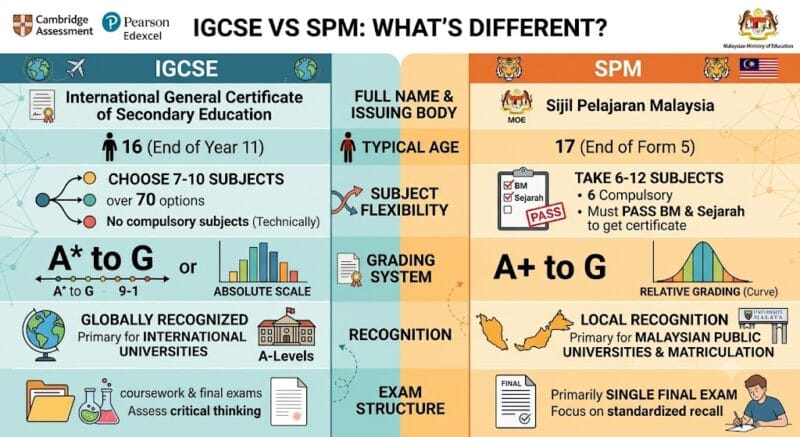
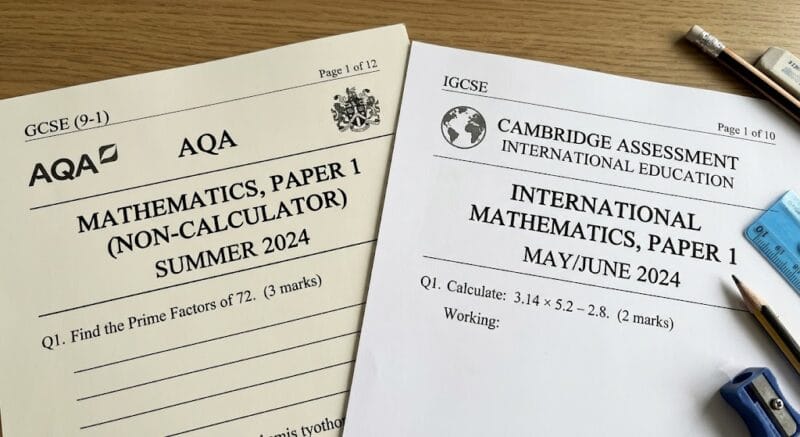
IGCSE results are reported on one of two scales depending on the exam board: the traditional A*–G scale, where A* is highest, or the newer 9–1 numerical scale, where 9 is highest. Cambridge International IGCSE mostly still uses A*–G, while Pearson Edexcel and Oxford AQA use 9–1 across their International GCSE subjects.
For Malaysian parents reading a results slip for the first time, the two scales can look confusing side by side, especially if siblings or classmates sit different boards — Aura Tycoon’s parent hub has more on making sense of the Cambridge pathway generally. Before the grading itself makes full sense, it helps to know how the different exam boards compare more broadly, since grading is just one of several differences between them.
How Does the A*–G Scale Work?
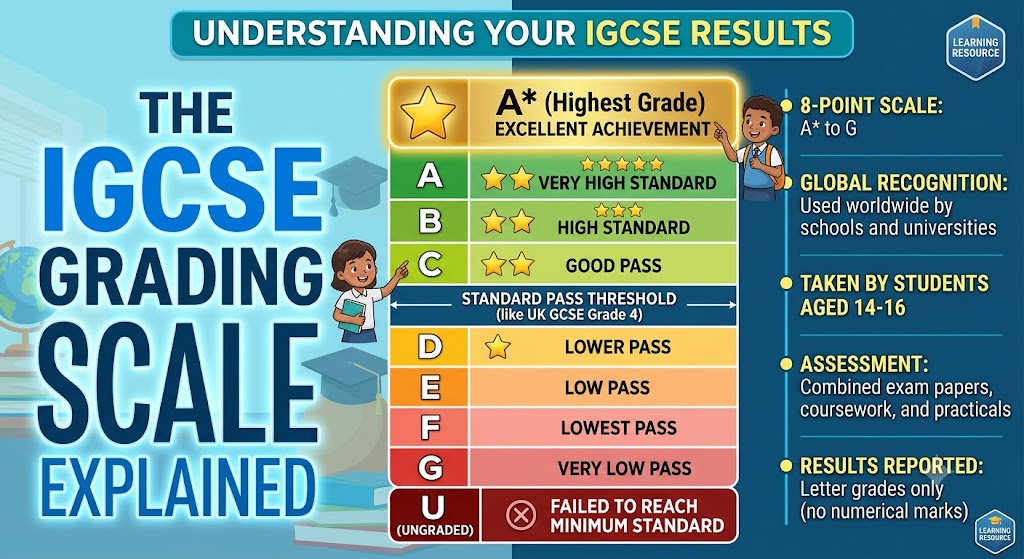
The A*–G scale runs, from highest to lowest: A*, A, B, C, D, E, F, G, with U (ungraded) below that for candidates who don’t meet the minimum standard. Cambridge IGCSE has used this scale for nearly 30 years, and the majority of Cambridge schools worldwide have told Cambridge they want to retain it, according to Cambridge International’s own factsheet on A*–G and 9–1 grading. Grade C is generally treated as the standard pass and the typical minimum for A Level entry.
How Does the 9–1 Scale Work?
The 9–1 scale runs from 9 (highest) down to 1 (lowest passing grade), with U for ungraded below that. It was introduced in the UK from 2017 to allow finer differentiation at the top end of performance — grades 9, 8 and 7 collectively cover roughly what A* and A used to represent, with grade 4 typically treated as a standard pass and grade 5 as a strong pass.
How Do the Two Scales Roughly Compare?
The mapping is approximate, not an exact one-to-one swap, but a rough guide looks like this:
| A*–G | Approximate 9–1 equivalent |
| A* | 9 or 8 |
| A | 8 or 7 |
| B | 6 |
| C | 4 or 5 |
| D–G | 1–3 |
Because this mapping is approximate, two students with an “A” on one scale and a “7” on another shouldn’t be assumed to have performed identically — the underlying grade boundaries differ by subject and session.
What Counts as a “Good” IGCSE Result?
There’s no single universal answer, since requirements depend on the next step a student is aiming for — A*/A or 8/9 grades matter more for highly competitive university courses, while a C or grade 4/5 is usually the baseline for progressing to A Levels. Malaysian families should check the specific entry requirements of the school or programme a student plans to move into next, rather than relying on general assumptions about what counts as “good.”
Free practice tool
Aura Tycoon is a free learning platform for Cambridge-track students — each chapter combines teaching videos, quizzes, and flashcards with practice questions, all with no ads and no cost. It helps build the Year 7 Science foundation years earlier, for free, with mistakes tracked by topic well before grading becomes the focus.
Start Practicing FreeFrequently Asked Questions About IGCSE Grading
Is A* better than a 9, or is 9 better than A*?
Grade 9 is generally considered slightly above A*, since the 9-1 scale was designed to differentiate more finely at the very top. The comparison is approximate rather than an exact equivalence, though.
What is considered a pass in IGCSE?
On the A*–G scale, C is generally treated as the standard pass; on the 9–1 scale, grade 4 is the standard pass and grade 5 a strong pass. Specific requirements can vary depending on the university or programme a student is aiming for.
Why do some Cambridge subjects use 9-1 and others use A*-G?
Cambridge has been phasing in 9-1 grading gradually for some subjects and regions rather than switching everything at once, so the two scales currently run side by side. Most Cambridge schools have told Cambridge they prefer to keep A*–G overall.
Does a lower grade mean a student failed?
Not necessarily — grades like D, E, F and G, or 1 through 3, are still classified passing grades, just below the standard "good pass" threshold most universities look for. Only U (ungraded) falls below the reporting scale entirely.
How are grade boundaries decided each year?
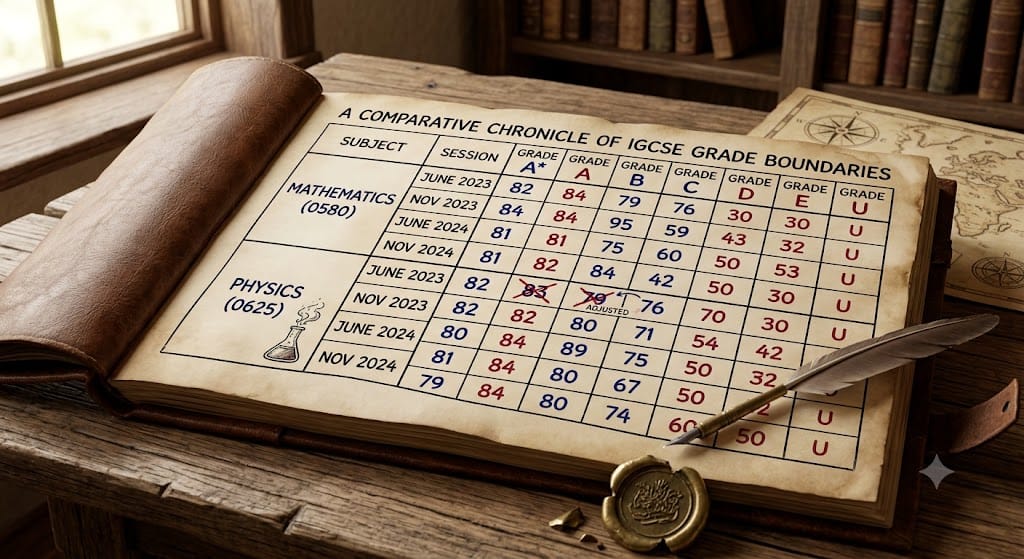
Grade boundaries are set after each exam session based on how the specific papers performed that year, rather than being fixed in advance. This is why there's no simple fixed percentage rule like "A* equals 90%."
Can two students with the same raw score get different grades?
Yes, if they sat different subjects, papers, or exam sessions, since grade boundaries are set separately for each. A 75% might be an A in one subject and a B in another, depending on how that specific paper's boundaries were set.
Do Malaysian universities understand both grading scales?
Generally yes, Malaysian and international universities are familiar with both A*–G and 9–1 scales, since both are widely used across Cambridge, Edexcel and Oxford AQA IGCSEs. Confusion is more common among parents unfamiliar with the newer 9–1 system than among admissions staff.
Is Mathematics graded differently because of Core and Extended papers?
Yes, subjects like Mathematics often split into Core and Extended tiers, with Core capping the maximum available grade lower than Extended. A student sitting Core papers cannot achieve the very top grades, regardless of performance.