Study Skills & Revision Techniques
The Study Skills guides cover the revision techniques with the strongest evidence behind them — active recall, spaced repetition, the Feynman Technique, blurting, the Pomodoro Technique, and how to use past papers properly — plus how to combine them into a weakness-first revision timetable. Written for Cambridge and IGCSE-track students and parents in Malaysia who want to replace passive re-reading with methods that actually work.
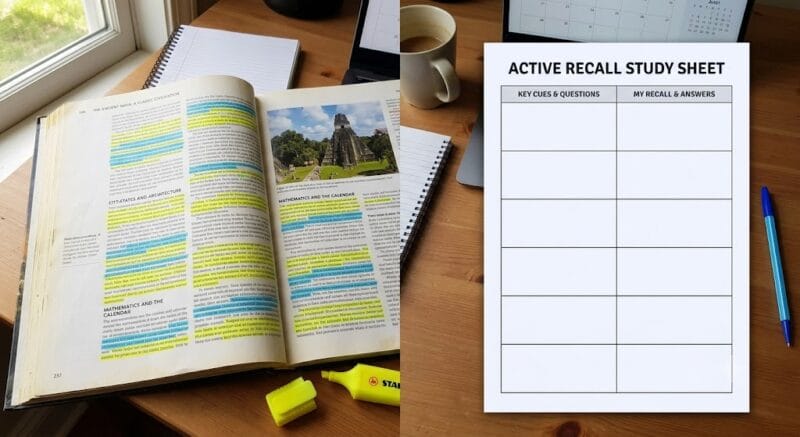
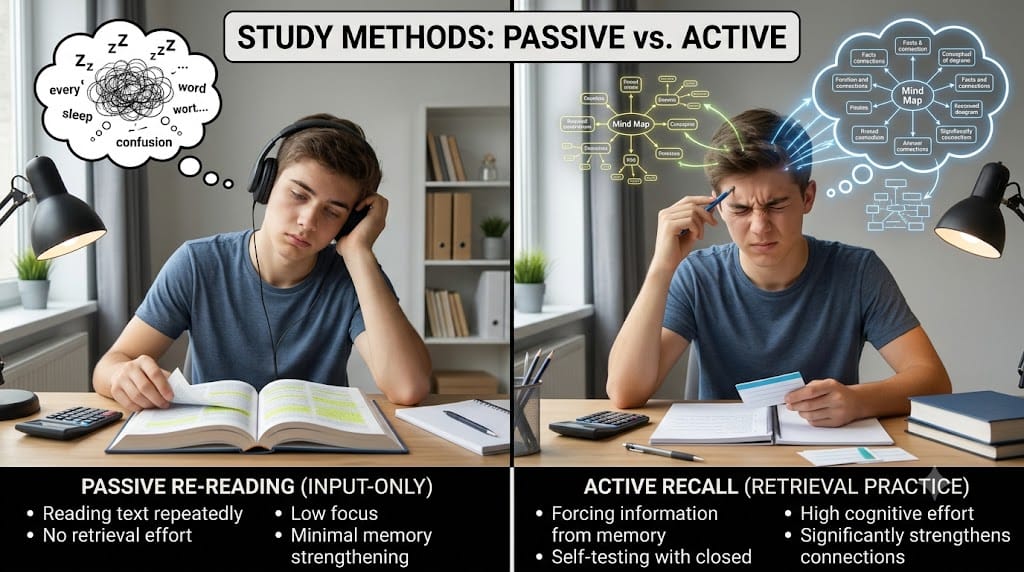
The common thread across every guide in this series is retrieval: testing what you can recall from memory, rather than simply reviewing material and mistaking familiarity for understanding. According to a major review of learning techniques from cognitive and educational psychology, retrieval-based methods consistently outperform highlighting, re-reading, and other passive study habits.
Guides in the Study Skills series
10 guides in this series, each covering one question in depth:
Frequently Asked Questions About Study Skills
What's the single most effective study technique for IGCSE revision?
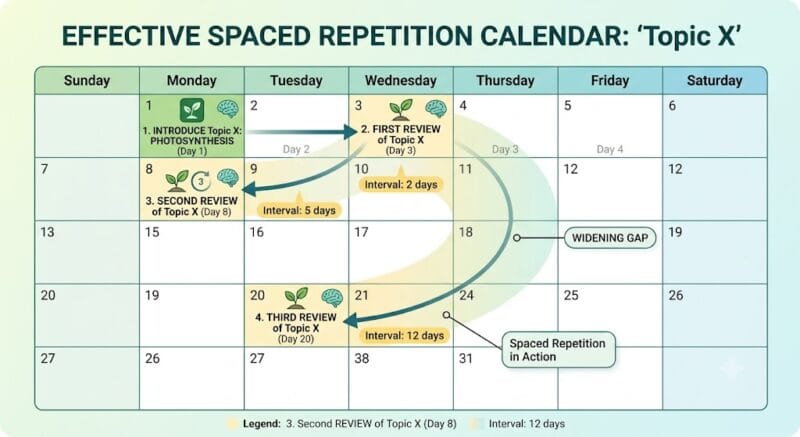
There isn't one single best technique — active recall and spaced repetition are the two most evidence-backed methods, and they work best combined: recall tests what's actually remembered, while spacing keeps that memory from fading. Passive methods like re-reading notes are consistently the least effective, despite being the most commonly used.
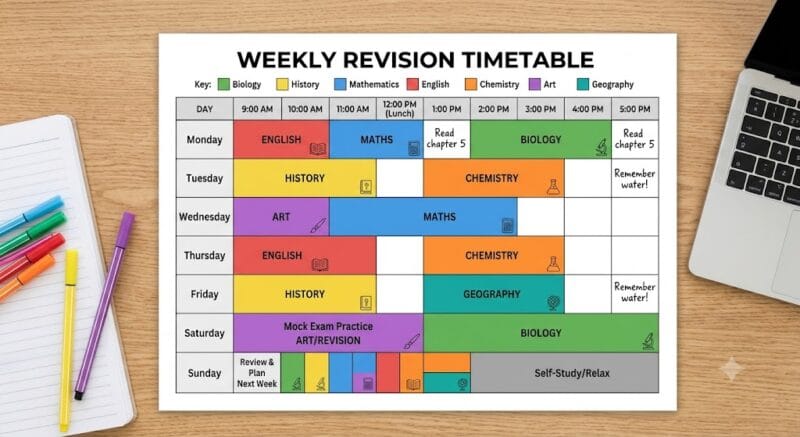
How is a revision timetable different from a to-do list?
A revision timetable schedules when each topic gets revisited over time, including topics already 'finished,' rather than listing tasks to clear once and forget. Spacing out revisits and weighting time toward weak topics is what makes a timetable effective, not just having one.
Do these techniques apply to Science revision specifically?
Yes — active recall, spaced repetition, and structured past-paper practice all apply directly to Cambridge and IGCSE Science revision, and tend to work best when paired with a running record of which topics keep coming up wrong across attempts.
Written by Aura Tycoon — a free, independent revision platform built around Cambridge’s own Lower Secondary framework. Not affiliated with Cambridge or Pearson Edexcel.
Every technique in this series works best when paired with a permanent record of what you actually get wrong: