How to Revise for IGCSE Science
The most effective way to revise IGCSE Science is to combine active recall and spaced repetition as the daily method, use past papers regularly to practise the exam format, and prioritise time based on which topics you actually get wrong — not which topics feel comfortable to review. No single technique does the whole job; it’s the combination, applied consistently, that produces results.
For Cambridge and IGCSE-track students in Malaysia, Science revision spans Biology, Chemistry and Physics content built up over several years, which makes a weakness-first approach especially valuable. A permanent Weakness Log that tracks every wrong answer by topic turns that prioritisation from a guess into something concrete.
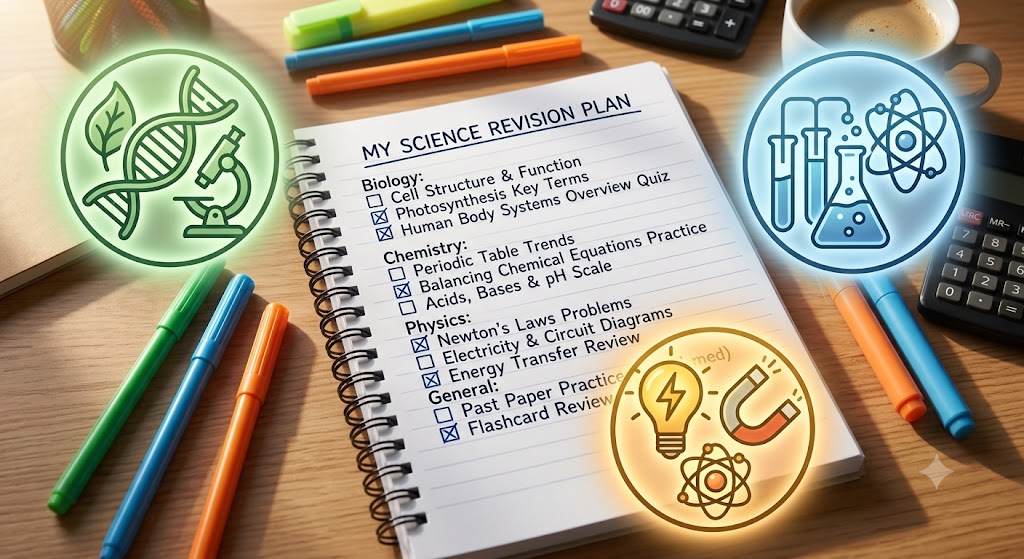
What Should a Weekly IGCSE Science Revision Routine Look Like?
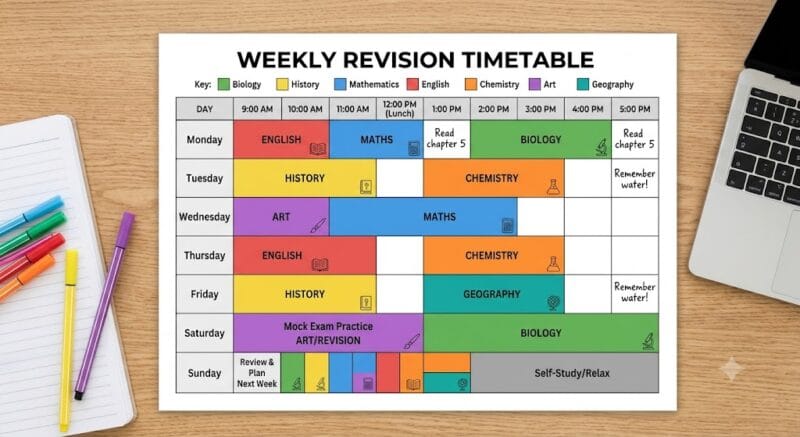
A solid weekly routine combines a few core habits, repeated consistently:
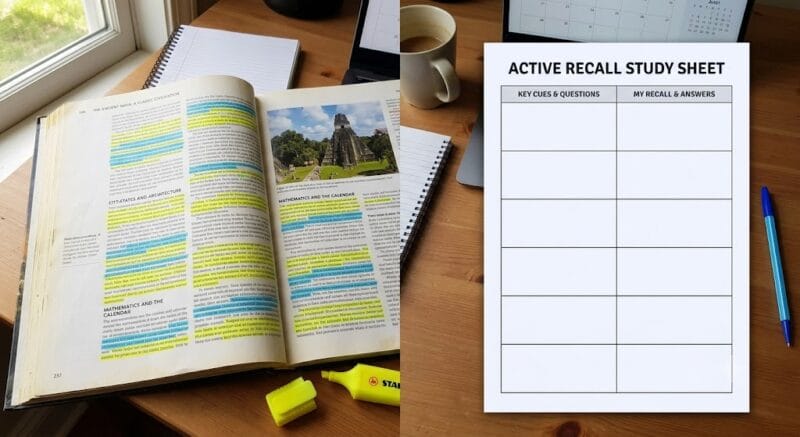
- Daily short recall sessions — a blurt or flashcard round on one topic, a few minutes each.
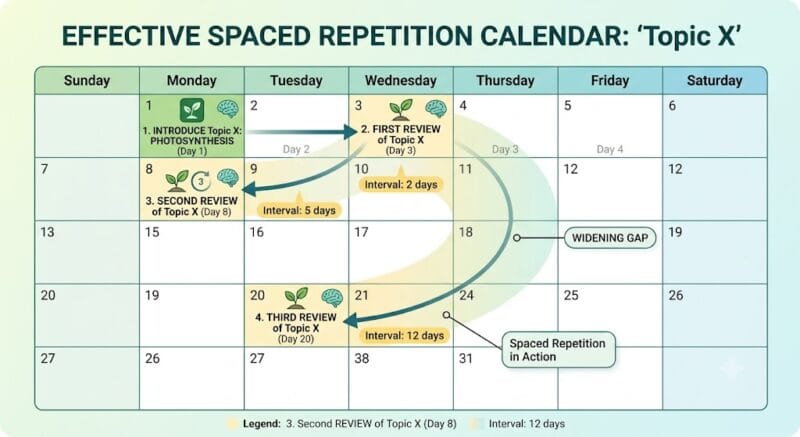
- Spaced revisits — bring older topics back on a widening schedule rather than only revising what’s current.
- Weekly past-paper practice — one timed set of questions, marked properly against the scheme.
- A weakness review — look at what’s been getting wrong most often and give it extra slots.
This is the same core toolkit covered individually elsewhere — active recall, spaced repetition, and past papers — brought together into one Science-specific routine.
Why Does Weakness-First Prioritisation Matter So Much for Science?
Science content builds cumulatively across Years 7 to 11, so a shaky Year 8 concept can quietly undermine an IGCSE-level question years later if it’s never properly fixed. Spending equal time across every topic wastes revision on material already understood, while genuinely weak strands stay weak. Reviews of effective study strategies consistently favour approaches that target retrieval and repetition over passive review, according to a major review of learning techniques from cognitive and educational psychology — and weakness-first prioritisation is simply that principle applied to time allocation, not just study method.
How Should Revision Differ Across Biology, Chemistry and Physics?
The core methods stay the same, but the balance shifts slightly by subject:
- Biology — heavy on processes and definitions; active recall and diagrams redrawn from memory work well.
- Chemistry — mixes definitions with calculations; past papers matter more here to practise working.
- Physics — formula-heavy; spaced practice of calculations alongside conceptual recall keeps both sharp.
How Do You Turn This Into an Actual Weakness-First Plan?
Once you know which topics are genuinely weak — from past-paper marking, blurting checks, or a running mistake log — build a revision plan that gives those topics the most slots. For the step-by-step version of that planning process, see building a weakness-first revision plan.
Free practice tool
Built for Cambridge-track students, Aura Tycoon is a free, ad-free platform where every chapter bundles short videos, quizzes, and flashcards together with practice questions and quick games. It offers free Year 7 Biology, Chemistry and Physics practice with every wrong answer automatically logged by topic — the weakness data this whole approach depends on, built in from the first question.
Start Practicing FreeFrequently Asked Questions About Revising IGCSE Science
What is the best way to revise for IGCSE Science?
Combining active recall and spaced repetition as the daily method, with regular past papers and weakness-first prioritisation, produces the most reliable results. No single technique alone covers everything a Science paper tests.
How many hours a week should I spend on IGCSE Science revision?
There's no universal number — what matters more is consistent, spaced sessions across the week rather than one long block. Several short focused sessions generally outperform a single marathon session.
Should Biology, Chemistry and Physics be revised the same way?
The core methods are shared, but the balance shifts — Chemistry and Physics benefit from more calculation practice, while Biology leans more on process and definition recall. All three benefit from past papers and weakness tracking.
How do I know which Science topics are actually weak?
Past-paper marking, blurting checks, and a running record of wrong answers by topic are the most reliable signals. Relying on how comfortable a topic feels tends to be misleading.
Does this approach work for Cambridge Checkpoint as well as IGCSE?
Yes, the same combination of recall, spacing, and weakness-first prioritisation applies to Checkpoint Science, since it also tests accumulated knowledge. Starting the habit before Year 9 makes IGCSE revision easier later.
How far in advance should IGCSE Science revision start?
Earlier is better, since the cumulative nature of Science content rewards spacing revision across months rather than weeks. Starting in Year 10, or even Year 9, gives more room for weak topics to be properly fixed.
What if I don't have much time before the exam?
Prioritise ruthlessly — spend the available time on the weakest topics identified through past papers or a mistake log, rather than spreading thin across everything. Weakness-first prioritisation matters most when time is short.
Can free tools help with IGCSE Science revision?
Yes, free tools that combine practice questions with automatic weakness tracking can save significant time compared to manually logging mistakes. The key feature to look for is whether it tracks wrong answers by topic, not just an overall score.