Why Re-Reading Notes Doesn’t Work
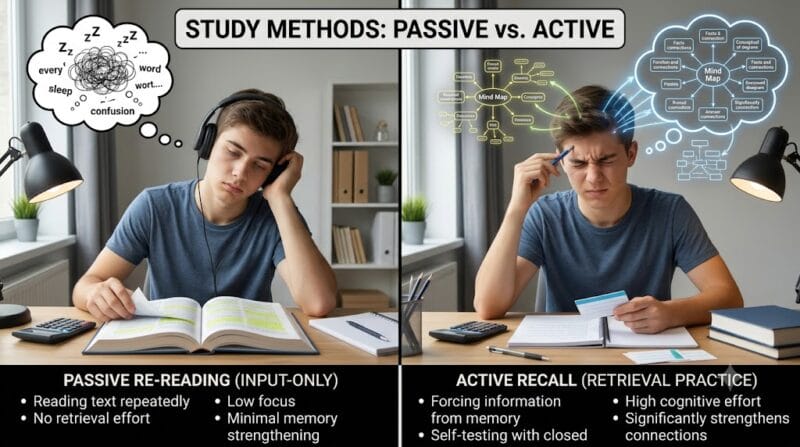
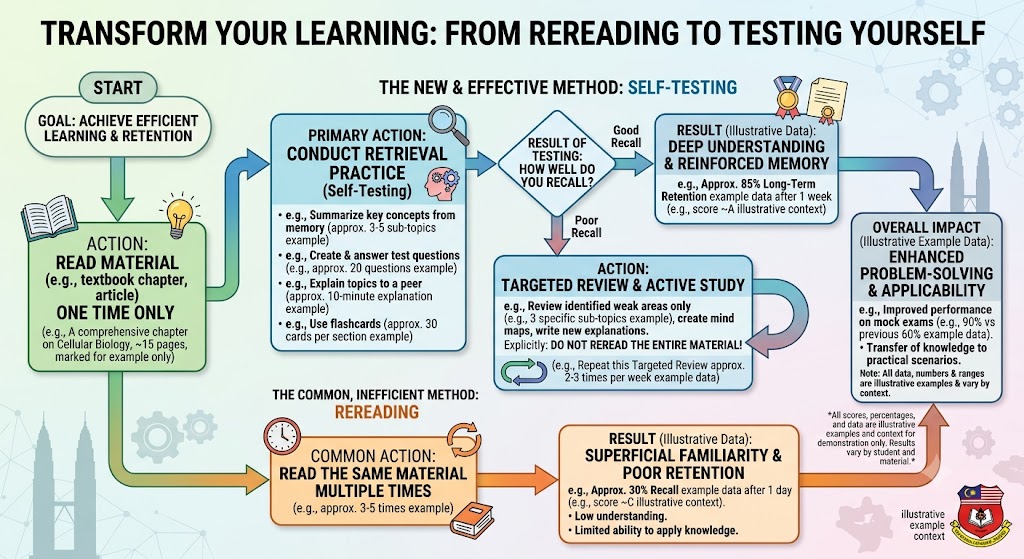
Re-reading notes doesn’t work well because it builds familiarity with the page, not retrieval from memory — and familiarity feels like knowledge right up until the exam, when there’s no page left to look at. It’s the most commonly used study method among students, and one of the least effective, because it asks almost nothing of memory.
For Cambridge and IGCSE-track students in Malaysia used to highlighting and re-reading before a test, this is worth knowing early: hours spent re-reading can feel productive while adding very little to what’s actually remembered. A better use of that time is retrieval-based practice tracked against a Weakness Log of the specific topics you keep getting wrong.
What Does the Research Actually Say About Re-Reading?
Across several controlled experiments comparing re-reading a text once against reading it multiple times, additional re-reading produced little to no measurable improvement on later tests, according to a peer-reviewed study on the limited benefits of rereading educational texts. A single first read does help build initial understanding — the problem is specifically with repeated re-reading as a revision strategy, which adds far less than students expect.
Why Does Re-Reading Feel Like It’s Working When It Isn’t?
Re-reading creates an “illusion of competence”: each pass makes the material more familiar and easier to process, and that ease gets mistaken for genuine understanding. Recognising a fact on a page you’ve just read is a much lower bar than producing that same fact from memory with the page closed — which is exactly what an exam demands. This gap between feeling prepared and being prepared is one of the most common ways revision time gets wasted.
What Should Students Do Instead of Re-Reading?
Replace re-reading with methods that force retrieval:
- Active recall — close the notes and write or say what you remember.
- Past papers — attempt questions before checking the mark scheme.
- The Blurting Method — a fast daily habit of recalling a topic from a blank page.
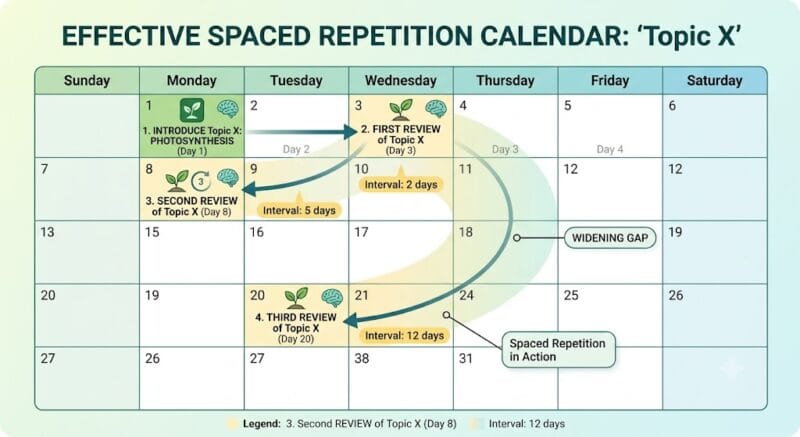
- Spaced repetition — revisit topics after a gap, not immediately.
A single first read-through is still a reasonable way to meet new material — the shift needed is simply not to rely on rereading for anything after that.
Is There Ever a Good Time to Re-Read?
Yes — a first read-through of new material is a reasonable starting point, and briefly re-reading a specific section to clarify a genuine gap after a failed recall attempt can help. The problem is treating repeated re-reading as the main revision strategy, rather than as an occasional, targeted top-up after retrieval has already shown what’s actually missing. For a full retrieval-based alternative, see what active recall is and how to start using it.
Free practice tool
Aura Tycoon is a free learning platform for Cambridge-track students — each chapter combines teaching videos, quizzes, and flashcards with practice questions, all with no ads and no cost. It offers free Year 7 Science practice questions with instant feedback, so every session is retrieval, not review.
Start Practicing FreeFrequently Asked Questions About Re-Reading Notes
Is re-reading notes ever useful?
A first read of new material is useful for building initial understanding, but repeated re-reading after that adds little. Testing yourself is far more effective than reading the same page again.
Why does re-reading feel productive if it doesn't work well?
Re-reading increases familiarity with the text, and that familiarity is easily mistaken for genuine understanding. This "illusion of competence" is well documented in memory research.
What should I do instead of re-reading before an exam?
Replace re-reading with active recall, past papers, or the Blurting Method — anything that makes you retrieve information rather than review it. These consistently outperform re-reading in research.
Does highlighting have the same problem as re-reading?
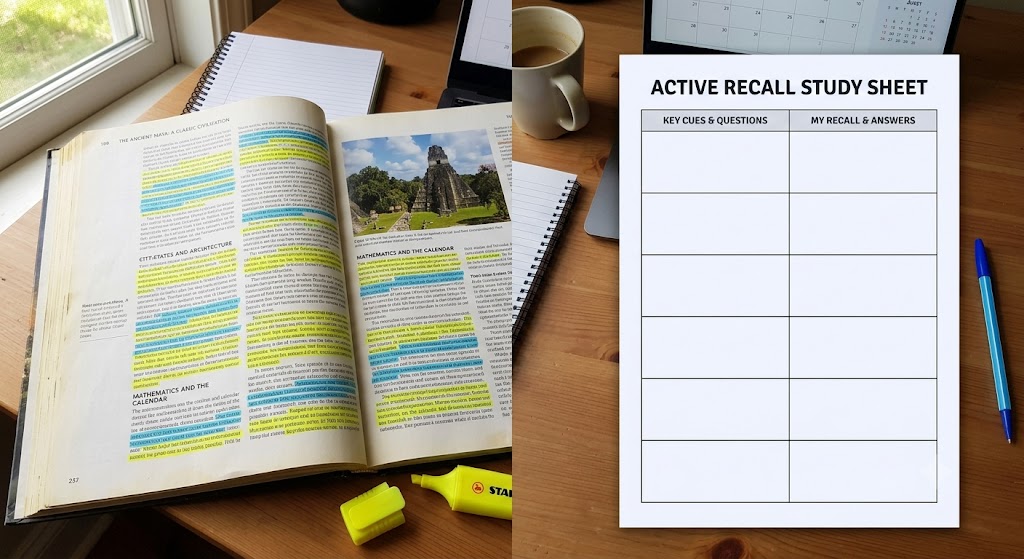
Yes, highlighting shares the same weakness — it feels productive but mostly just marks text, without requiring retrieval. Reviews of study techniques generally rate both as low-value compared to active recall.
Is re-reading worse for Science subjects specifically?
Re-reading is weak across all subjects, though Science's cumulative, process-based content makes the gap especially noticeable — recognising a diagram is very different from being able to draw or explain it from memory. Active recall exposes that gap early.
How much of my revision time is wasted on re-reading?
That depends on the student, but if re-reading is the main method used, a substantial share of study time may be adding little. Swapping even part of that time for retrieval practice tends to improve results without adding hours.
Can re-reading work if I do it more slowly and carefully?
Slower, more thoughtful reading can help somewhat more than fast rereading, but it still falls short of retrieval-based methods. Testing yourself remains more effective than any style of re-reading alone.
Is it too late to change study habits if I've always re-read my notes?
No — swapping re-reading for active recall can be done at any point, and even switching close to an exam tends to help. The change is simple: close the notes, and try to produce the answer first.