The Blurting Method: A Daily Revision Habit
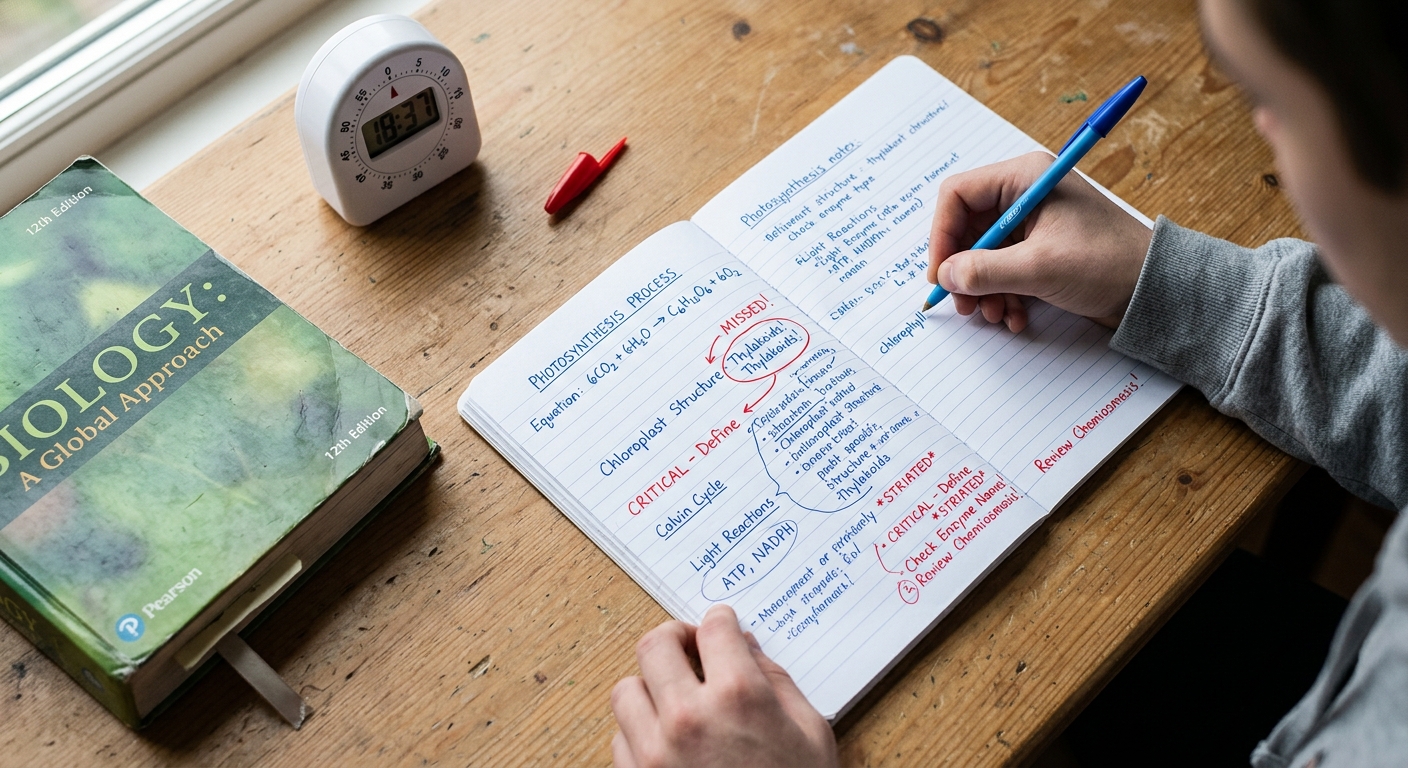
The Blurting Method is a quick daily revision habit where you write down everything you can remember about a topic on a blank page, then check your notes and mark what you missed in a different colour. It’s a stripped-down, fast version of active recall, designed to fit into a few minutes rather than a full study session.
For Cambridge and IGCSE-track students in Malaysia, it’s an easy habit to start today, since it needs nothing but paper and a topic. Used daily across a subject, it also builds a natural map of weak spots — the same idea behind a running Weakness Log that tracks mistakes by topic over time.
How Do You Actually Blurt a Topic?
The method has three quick steps:
- Blurt — set a short timer (5-10 minutes) and write down everything you remember about the topic, without checking notes.
- Check — open your notes or textbook and compare, in a different colour, marking what you got right, wrong, or missed entirely.
- Revisit — a day or two later, blurt the same topic again, focusing on what was marked wrong or missing.
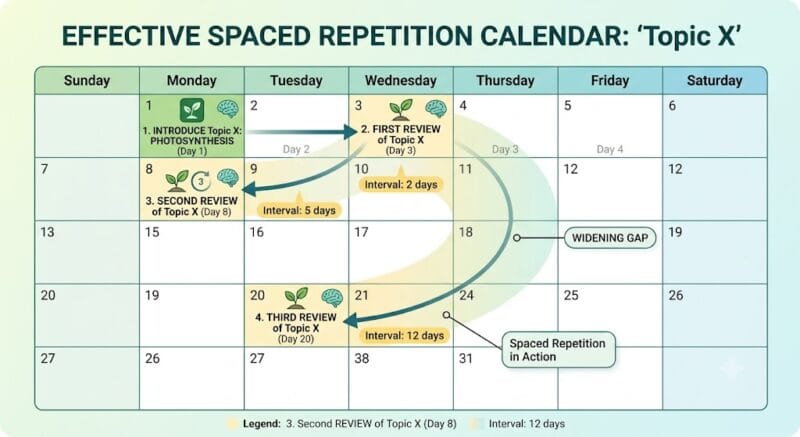
Repeating the check step over several days turns one blurt into a genuine spaced-recall routine.
Why Is Blurting an Effective Daily Habit?
Blurting works because it’s retrieval practice with almost no setup cost, so it’s realistic to do every day rather than only during dedicated study sessions. Regularly retrieving information from memory — even briefly — has been shown to strengthen retention more than passive review, including in studies with school-age children on the effects of retrieval practice. Because each blurt takes only minutes, it’s one of the easiest ways to fit daily retrieval into a busy school and tuition schedule.
How Is Blurting Different From a Full Past-Paper Attempt?
Blurting is faster and less structured than a past paper — it tests what you remember about a topic broadly, rather than answering specific exam-style questions under timed conditions. It’s a good daily warm-up; a full past paper is still needed nearer the exam to practise the actual format. For that fuller check, see how to attempt and mark a past paper properly.
Can Younger Students Use the Blurting Method?
Yes — blurting suits younger students especially well, since it’s short, has clear steps, and gives immediate visual feedback through the colour-coded check. A Year 7 student can blurt a single Science topic in the time it takes to walk between classes.
Free practice tool
Aura Tycoon is a free learning platform for Cambridge-track students — each chapter combines teaching videos, quizzes, and flashcards with practice questions, all with no ads and no cost. It tracks every Year 7 Science question a student gets wrong, for free — a ready-made shortlist for a daily blurting habit.
Start Practicing FreeFrequently Asked Questions About the Blurting Method
What is the Blurting Method in revision?
It's a quick habit of writing everything you remember about a topic from memory, then checking against your notes and marking the gaps. It's a fast, low-effort form of active recall.
How long does a blurting session take?
Most blurting sessions take five to ten minutes per topic, plus a few minutes to check and mark. That short time commitment is what makes it realistic as a daily habit.
Is the Blurting Method suitable for Science subjects?
Yes, it works well for Science definitions, processes and short-answer style content. Diagrams and calculations are usually better suited to other methods like past papers.
How is blurting different from active recall generally?
Blurting is a specific, fast version of active recall — write everything you remember, then check. Active recall is the broader principle that also includes flashcards, past papers and explaining topics aloud.
Should I blurt the same topic more than once?
Yes, revisiting a topic a few days after the first blurt and blurting it again is one of the most useful parts of the method. It shows directly whether the gaps from the first attempt have closed.
Can the Blurting Method replace past papers?
No, it's a useful daily supplement rather than a replacement — past papers test the actual exam format and timing that blurting doesn't cover. Both have a place in a full revision routine.
What colour system should I use to check my blurting?
Any simple system works, such as green for correct, red for wrong, and a third colour for anything missed entirely. The goal is a quick visual signal of where the gaps are, not a perfect system.
Is the Blurting Method good for a student short on time?
Yes, it's one of the most time-efficient revision methods available, since a single topic can be blurted in minutes. It fits easily into short gaps in a busy school and tuition schedule.