How to Build a Revision Timetable
A good revision timetable starts from your exam dates and works backwards, gives weaker subjects and topics more slots, and spaces each topic across several sessions rather than one. The aim is steady, spaced coverage of everything — not long marathon days on a single subject.
For Cambridge and IGCSE-track students in Malaysia, a realistic timetable is what turns good intentions into actual revision. It’s far more useful when it’s weighted toward genuine weak spots, which is where an automatic log of every question you’ve missed helps you decide what deserves the most slots.
How Do You Build a Revision Timetable Step by Step?
Build it in order, from the exam backwards:
- List every subject and its main topics.
- Rank topics by weakness, giving the shakiest ones priority.
- Count the weeks until each exam so the plan fits the real calendar.
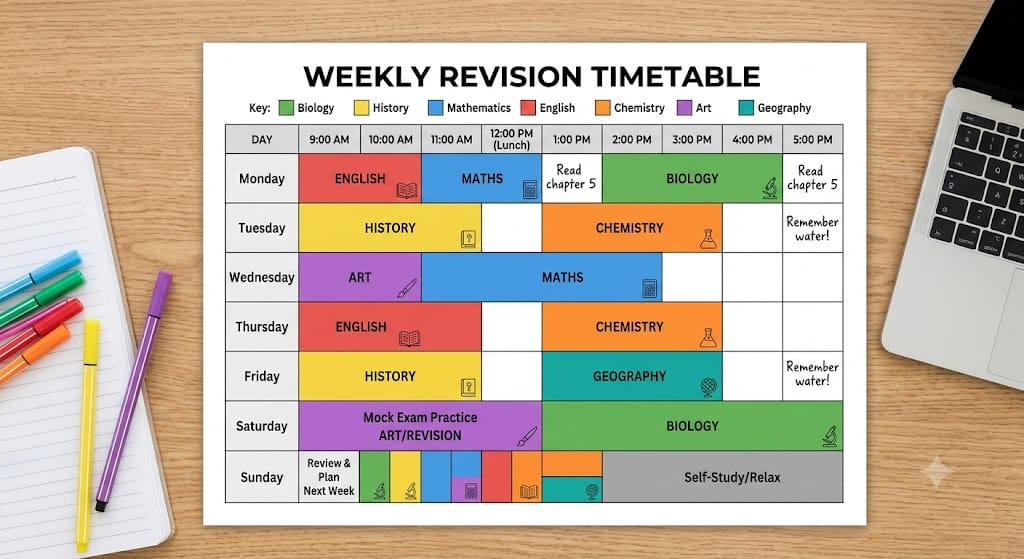
- Block realistic sessions — short, focused, with breaks — around school and tuition.
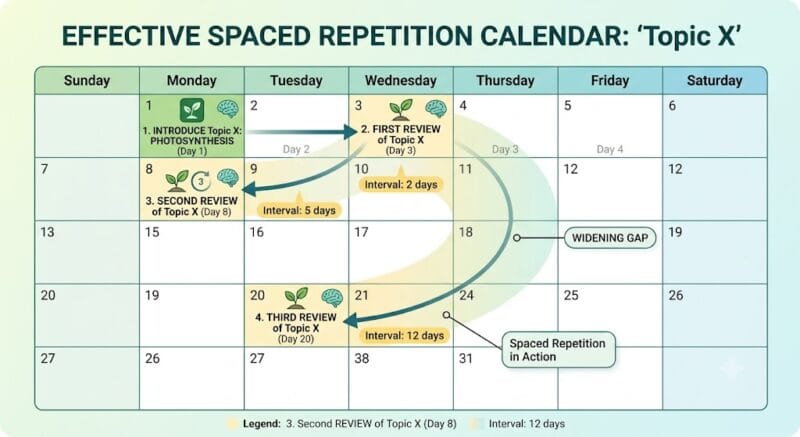
- Spread each topic across several dates, not one long sitting.
- Leave buffer and review time for catch-up and spaced revisits.
Why Should a Timetable Space Topics Out?
A timetable should space topics because reviewing material across multiple days builds far stronger memory than covering it once in a block. Distributed practice is rated among the most effective study strategies in a major review of learning techniques, and a timetable is simply the practical tool that schedules that spacing. To understand the principle behind the scheduling, see how spaced repetition decides when each topic comes back.
What Makes a Revision Timetable Fail?
Most timetables fail for predictable reasons:
- Too ambitious — packed with more hours than anyone could sustain.
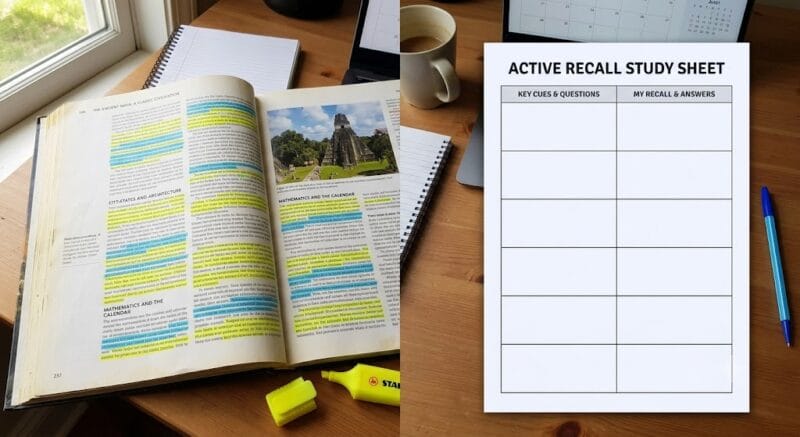
- All reading, no recall — scheduling passive review instead of active practice.
- No weakness weighting — equal time to strong and weak topics alike.
- No breaks or buffer — leaving no room for rest or catch-up.
- Colour-coding instead of studying — spending the effort on the plan, not the work.
How Do You Fit a Timetable Around Malaysian School and Tuition?
Build the timetable around fixed commitments first — school hours, tuition, and travel — then fill the genuine gaps with short revision blocks rather than imaginary free time. Anchor the whole plan to the exam series months, whether May/June or October/November, and keep the daily load small enough that you’ll actually follow it on a normal school night.
Free practice tool
Built for Cambridge-track students, Aura Tycoon is a free, ad-free platform where every chapter bundles short videos, quizzes, and flashcards together with practice questions and quick games. It shows which Year 7 Science topics a student keeps getting wrong, for free — so the slots go where they’re needed most.
Start Practicing FreeFrequently Asked Questions About Revision Timetables
How far in advance should I make a revision timetable?
Ideally several weeks to a few months before the exams, so topics can be spaced out properly. A timetable made only days before leaves no room for the spacing that makes revision stick.
How many hours a day should a revision timetable have?
Enough to be sustainable on a normal school day rather than a maximum you can't keep up — often a few focused blocks. A realistic plan you follow beats an ambitious one you abandon.
Should every subject get equal time on the timetable?
No — weaker subjects and topics should get more slots, since equal time over-serves what you already know. Weighting toward weak spots is one of the biggest gains a timetable can offer.
How do I fit revision around school and tuition in Malaysia?
Schedule fixed commitments first, then place short revision blocks in the real gaps around them. Frequent short sessions fit a busy week better than rare long ones.
What should each timetable slot contain?
Active work — past-paper questions, recall practice, or explaining a topic — rather than passive re-reading. Naming the specific task for each slot makes it far more likely to happen.
Should I include breaks in my revision timetable?
Yes, breaks are essential for sustaining focus and should be built in deliberately, not treated as failure. Short regular breaks help you keep going for longer overall.
What if I fall behind my revision timetable?
Build in buffer time so slipping a little doesn't derail the whole plan, and adjust rather than abandon it. Timetables are guides to follow flexibly, not contracts to feel guilty about.
Is a digital or paper revision timetable better?
Whichever you will actually check daily — the format matters less than the habit of using it. Some students like calendar apps with reminders; others prefer a printed grid on the wall.