What Is Spaced Repetition?
Spaced repetition is a revision technique where you review material at gradually increasing intervals — a day later, then a few days later, then a week, then longer — instead of studying it all at once. Spreading the same total study time across more days produces far stronger long-term memory than cramming it into a single session.
For Cambridge and IGCSE-track students in Malaysia, it’s one of the two techniques cognitive scientists rate most highly, and it needs no special tools to start. It works best when you know which topics to space out most — which is where a permanent, topic-tagged Weakness Log helps, by showing exactly which questions you keep getting wrong.
Why Does Spacing Beat Cramming?
Spacing beats cramming because each review after a delay forces your brain to work slightly harder to retrieve the memory, and that effort is what makes it durable. When study sessions are packed back to back, the material still feels fresh, so retrieval is easy and little learning is locked in. Leave a gap, and the small struggle to remember strengthens the memory each time. Reviews of classroom evidence consistently rate distributed practice among the most effective study strategies available, according to a major review of learning techniques by cognitive and educational psychologists.
How Do You Actually Space Your Revision?
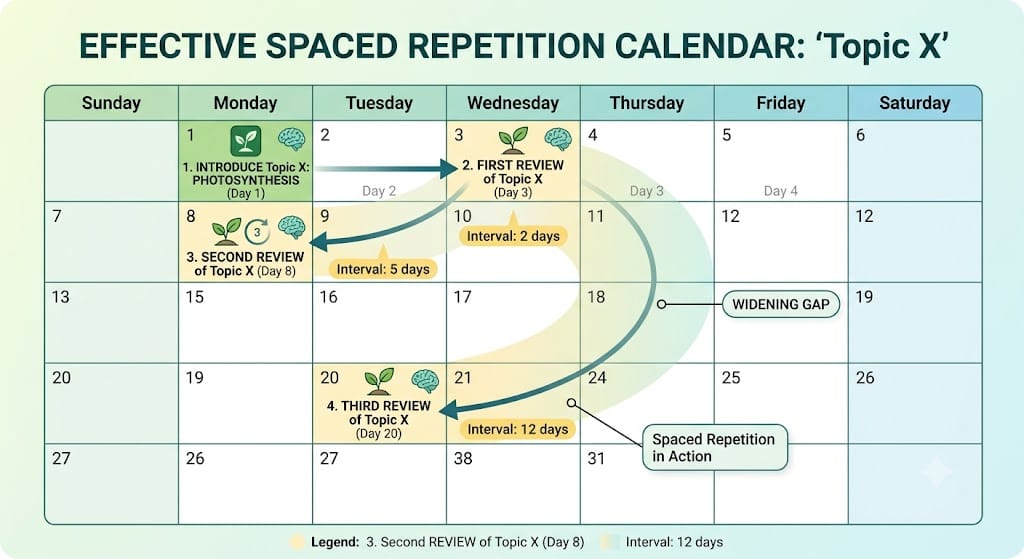
The simplest method is to revisit a topic on an expanding schedule — for example one day, three days, a week, then two weeks after first learning it. A few practical ways to do it:
- Expanding intervals — push the gap wider each time you get a topic right; shorten it when you get it wrong.
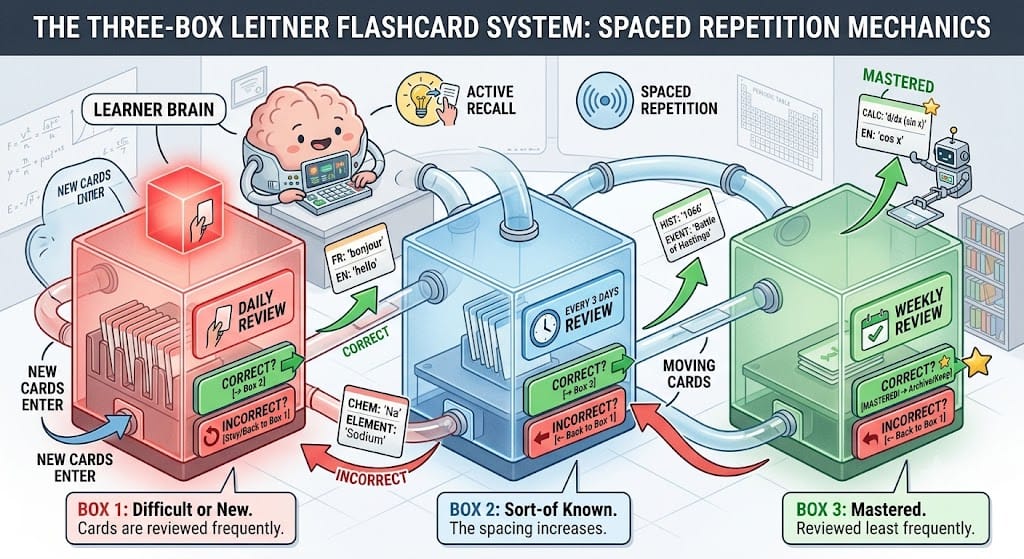
- Flashcard systems — Leitner boxes or apps like Anki automate the spacing for you.
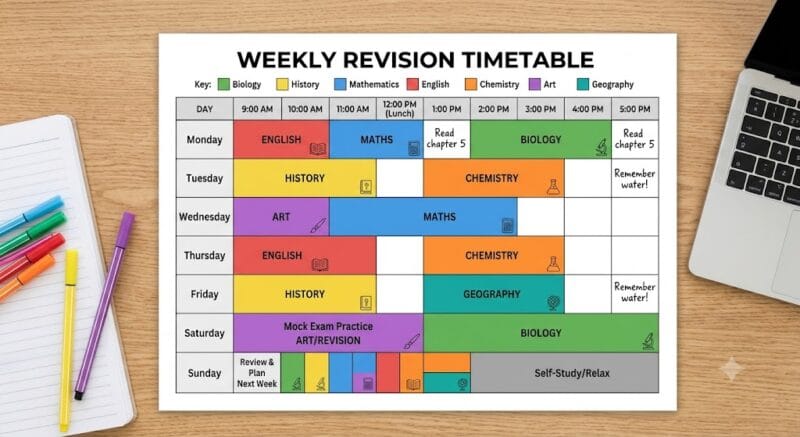
- Calendar blocks — write each topic’s review dates straight into your revision timetable so they aren’t forgotten.
- Revisit what you miss sooner — anything you got wrong comes back in days, not weeks.
How Is Spaced Repetition Different From Active Recall?
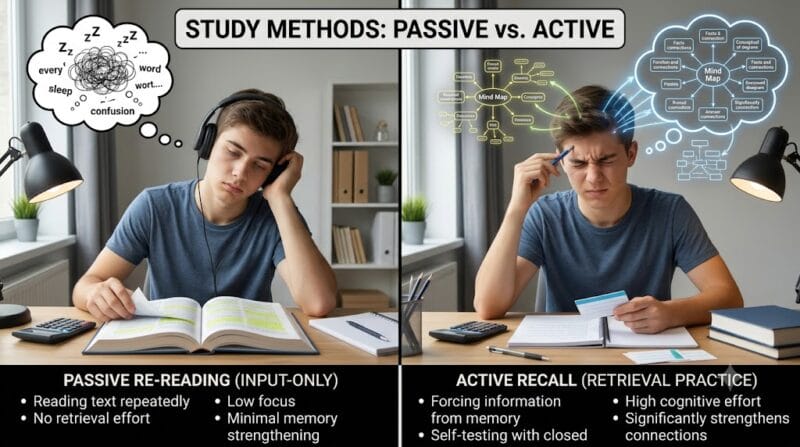
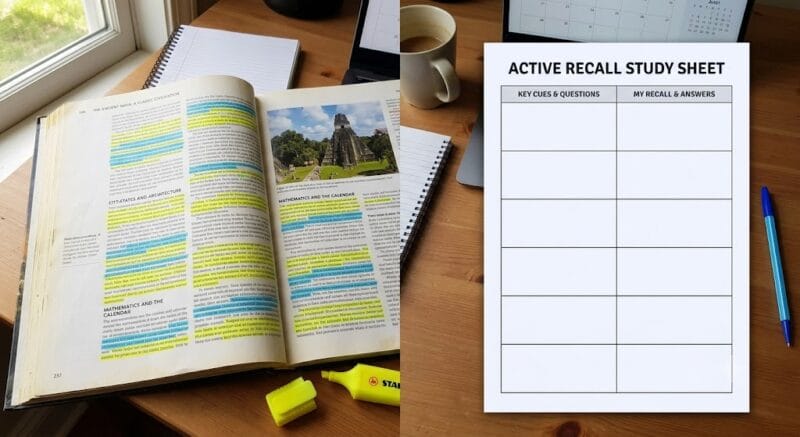
Spaced repetition is when you revise; active recall is how you revise. Spacing decides how often a topic comes back around, while active recall is what you actually do in the session — retrieving the answer from memory rather than re-reading it. They are strongest used together, and you can read more about the active-recall techniques that make each spaced review count.
How Should Malaysian Students Fit Spacing Around the School Year?
Start spacing early — from Year 7, not the term before the exam — so topics get several passes before the May/June or October/November series. Because the Cambridge pathway tests accumulated knowledge, a topic first met in Year 7 can still appear in a Year 9 Checkpoint or an IGCSE paper, so scheduling old topics back in every few weeks pays off across the whole programme.
Free practice tool
Aura Tycoon is a free, ad-free learning platform for Cambridge-track students, pairing short chapter videos, quizzes, and flashcards with practice questions and quick games. It re-surfaces questions you’ve previously gotten wrong so weak topics come back around automatically, for free, across Year 7 Biology, Chemistry and Physics.
Start Practicing FreeFrequently Asked Questions About Spaced Repetition
Is spaced repetition better than cramming for IGCSE?
Yes — for lasting memory, spacing study across several days consistently outperforms cramming the same hours into one session. Cramming can help for a test the next morning, but the material fades quickly afterwards.
How long should the gaps between reviews be?
A common starting pattern is one day, then three days, then about a week, then two weeks, widening each time you recall successfully. The exact numbers matter less than the principle of leaving a gap and stretching it as memory strengthens.
Does spaced repetition work for Science subjects?
Yes, spacing works well for Biology, Chemistry and Physics, especially for definitions, processes and formulae that need to stay accessible over years. Topics that build on each other benefit most from being revisited regularly.
What apps can I use for spaced repetition?
Anki and Quizlet are popular free or low-cost flashcard apps that schedule reviews automatically. A paper Leitner box works just as well if you prefer to stay off-screen.
When should I start using spaced repetition before an exam?
As early as possible — ideally from the start of the school year rather than the final weeks. The technique's whole advantage comes from spacing over time, which cramming near the exam cannot recreate.
Is spaced repetition the same as revising little and often?
Broadly yes, with one addition: the gaps should gradually widen, and topics you find hard should come back sooner. It's little and often, but scheduled deliberately rather than at random.
Can spaced repetition help with Cambridge Checkpoint?
Yes, because Checkpoint tests knowledge accumulated across Years 7 to 9, spacing keeps older topics fresh for the Year 9 papers. Revisiting early material every few weeks stops it fading before the assessment.
How do I combine spaced repetition with a busy tuition schedule?
Slot short review sessions into gaps you already have — a few minutes before tuition or after school — rather than adding long new blocks. Spacing rewards frequency, so brief regular reviews fit a busy week well.