What Is Co-ordinated Science (Double Award)?
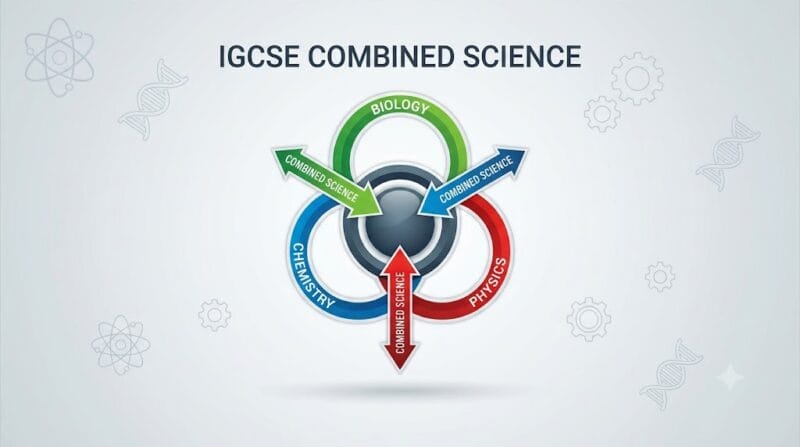
Co-ordinated Science, also called Double Award Science, is an IGCSE qualification covering Biology, Chemistry and Physics within one cross-referenced, scientifically coherent syllabus, earning students two IGCSE grades rather than one. It sits between Combined Science (single award, less depth) and Separate Sciences (three individual awards, full depth) in both coverage and workload.
For Malaysian families comparing Science options, Co-ordinated Science is often the least understood of the three, frequently confused with Combined Science despite being a genuinely different qualification. Aura Tycoon’s Physics practice is free to browse for a sense of one strand in practice. This same double-award structure also exists under other exam boards — comparing Cambridge’s version against Edexcel’s Double Award Science is worth a look if your school might use either.
How Is Co-ordinated Science Structured?
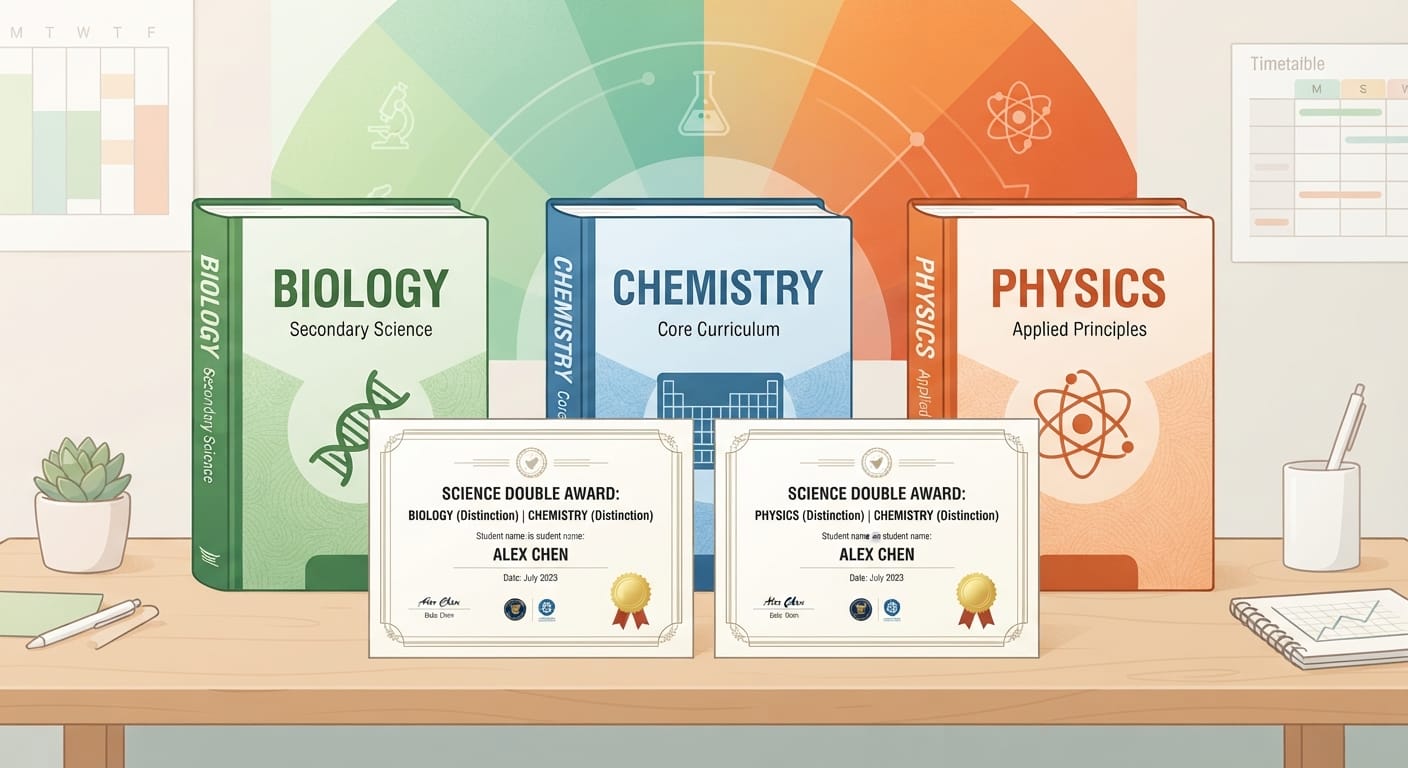
Cambridge IGCSE Co-ordinated Sciences (syllabus code 0654) gives learners the opportunity to study Biology, Chemistry and Physics within a cross-referenced, scientifically coherent syllabus, and it’s a double award qualification, earning two grades, according to Cambridge International’s own programme page. Content is organised into three sections — Biology, Chemistry and Physics — and candidates must study all three, typically sitting two papers per subject area.
How Does Co-ordinated Science Differ From Combined Science?
Co-ordinated Science covers broader and deeper content than Combined Science, reflected in its two-grade double award status compared to Combined Science’s single overall grade. Both cover all three sciences, but Co-ordinated Science’s syllabus is specifically designed to be more scientifically coherent and closer in depth to the separate subjects.
How Does Co-ordinated Science Compare to Separate Sciences?
Co-ordinated Science still falls short of Separate Sciences’ full individual-subject depth, since content is delivered as one coherent, somewhat condensed syllabus rather than three genuinely independent subjects. Students who later want to specialise heavily in one science at A Level may still encounter some content gaps compared to peers who took that subject as a Separate Science.

Why Might a Family Choose Co-ordinated Science Specifically?
Co-ordinated Science offers a genuine middle ground — broader and more credible than Combined Science for two grades’ worth of recognition, without the full three-subject workload of Separate Sciences. It suits students who want to keep more Science-related options open than Combined Science allows, but who don’t need or want the maximum depth of Separate Sciences.
Free practice tool
Aura Tycoon is a free, ad-free platform built for Cambridge-track students, where every chapter bundles short videos, quizzes, and flashcards together with practice questions and quick games. It supports the Biology, Chemistry and Physics foundation this qualification builds on, for free, from Year 7 onward — useful groundwork regardless of which Science combination is chosen later.
Start Practicing FreeFrequently Asked Questions About Co-ordinated Science
Is Co-ordinated Science the same as Combined Science?
No, they're genuinely different qualifications — Combined Science is a single award with one grade, while Co-ordinated Science is a double award with two grades and broader content coverage. The two names are often confused informally but represent distinct syllabuses.
How many IGCSE grades does Co-ordinated Science give?
Two grades, since it's a double award qualification equivalent to two separate IGCSEs. This distinguishes it clearly from Combined Science's single overall grade.
Is Co-ordinated Science as deep as Separate Sciences?
Not quite — while it's broader and deeper than Combined Science, Co-ordinated Science's coherent, somewhat condensed syllabus still falls short of the full depth offered by studying Biology, Chemistry and Physics as fully independent Separate Sciences.
Does Co-ordinated Science offer Core and Extended tiers?
Yes, like the other Science combinations, Co-ordinated Science offers both Core and Extended tiers, with the standard grade ceiling rules applying to each.
Is Co-ordinated Science available on the 9-1 grading scale?
Cambridge offers a 9-1 version of Co-ordinated Science (syllabus code 0973) alongside the traditional A*-G version (0654), with identical syllabus content but different grading scales. Schools choose which version to offer.
Does Co-ordinated Science prepare students well for Separate Science A Levels?
It offers a stronger foundation than Combined Science but may still leave some content gaps compared to students who took the full Separate Sciences. It's a reasonable middle-ground preparation, not a perfect substitute.
How does workload for Co-ordinated Science compare to Separate Sciences?
Co-ordinated Science generally involves a lighter workload than three full Separate Sciences, since it's delivered as one coherent syllabus rather than three independent ones, even though it still covers all three subject areas.
Is Co-ordinated Science a common choice among Malaysian Cambridge schools?
Availability varies by school — some offer it as a genuine middle-ground option, while others focus on either Combined Science or full Separate Sciences. Checking directly with a specific school confirms what's actually on offer.