Do You Need Separate Sciences for Medicine and Engineering?
Separate Sciences at IGCSE aren’t universally mandatory for Medicine or Engineering, but they’re the safer, more commonly recommended choice, since many competitive university programmes and schools expect or effectively require separate Science A Levels — and those are far more accessible to students who took Separate Sciences at IGCSE rather than Combined Science. Sources genuinely differ on how strict this requirement is, so families shouldn’t treat it as an absolute rule, but ignoring it also carries real risk for the most competitive pathways.
For Malaysian families weighing this specifically, it connects directly to what’s actually involved in switching from Double Award to Triple Science if this evidence changes a family’s mind partway through the course, since Medicine and Engineering are the clearest real-world cases where that choice has lasting consequences. Aura Tycoon’s Chemistry practice is free to browse, useful groundwork either way.
What Do Medicine Pathways Typically Expect?
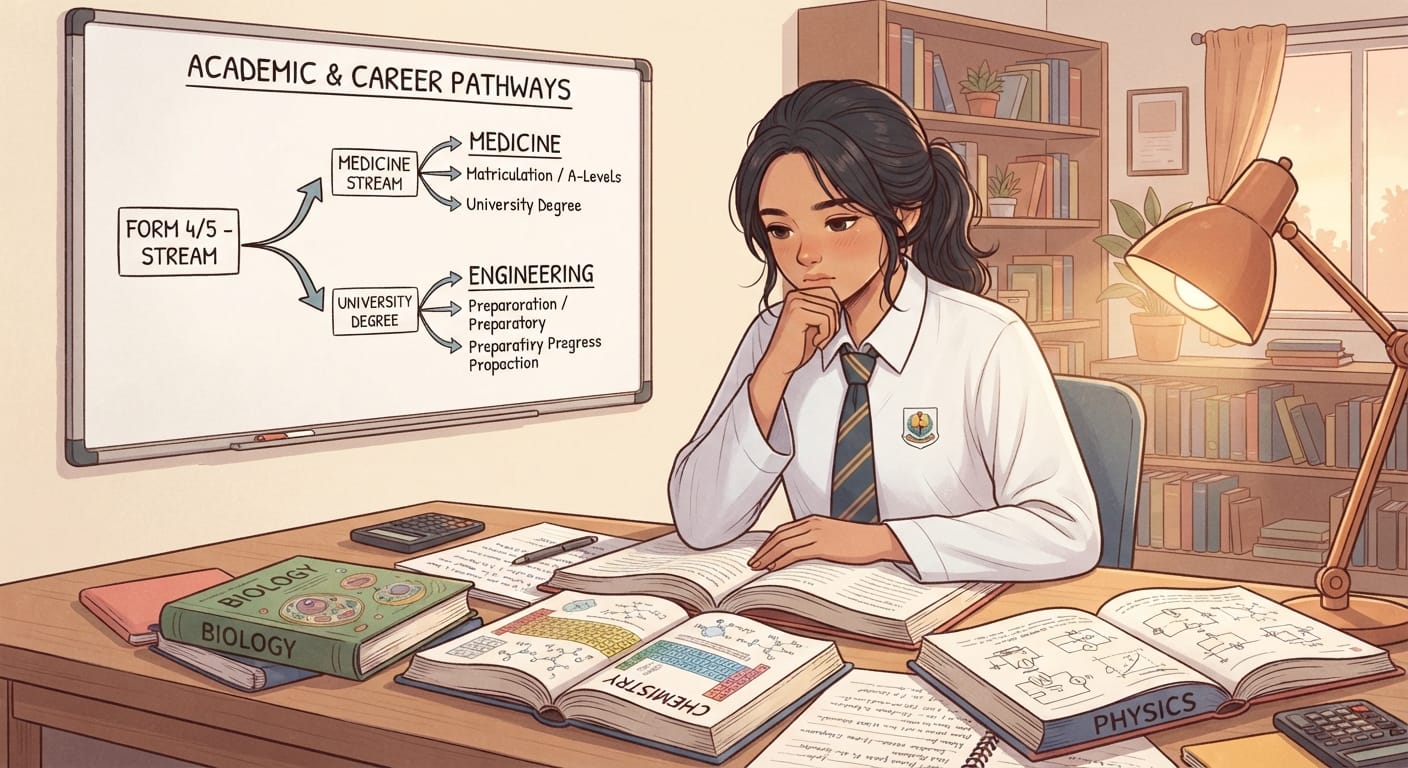
Medicine and related fields like Dentistry, Pharmacy, and Veterinary Science typically expect strong results in Biology and Chemistry specifically, and highly competitive medical schools often favour applicants with Separate Science IGCSEs over Combined Science, according to guidance from Cambridge’s own Co-ordinated Sciences programme documentation on progression toward further study. A student taking Combined Science and later wanting Separate Science A Levels for Medicine may need to close content gaps that could have been avoided with earlier subject choices.
What Do Engineering Pathways Typically Expect?
Engineering programmes generally place the most weight on strong Mathematics and Physics results specifically, rather than requiring all three Separate Sciences equally. A student focused on Engineering may prioritise Physics and Mathematics depth over, say, Biology depth, though keeping all three Sciences separate still preserves the most flexibility if plans shift.
Why Do Sources Disagree on How Strict This Requirement Is?
Some sources frame Separate Sciences as effectively required for the most competitive Medicine and Engineering programmes, while others note that A Level subject choices and overall academic performance ultimately matter more than the specific IGCSE Science combination. Both views have merit — the honest picture is that Separate Sciences reduces risk and keeps the most doors open, without being an absolute, universal requirement at every single institution.

What Should a Family Do If This Pathway Is a Genuine Possibility?
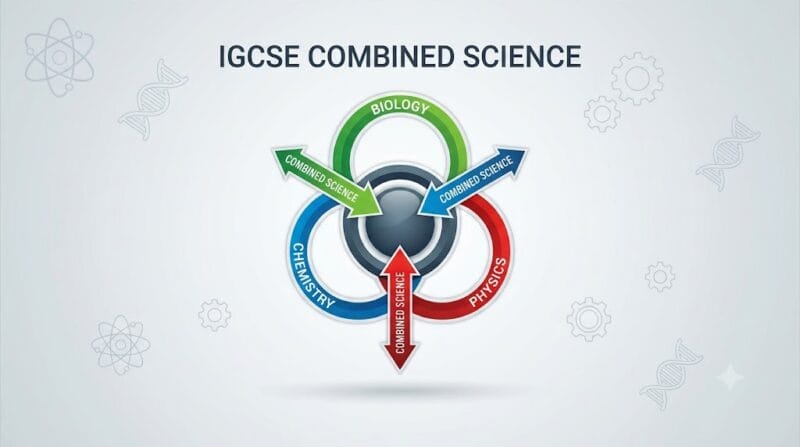
If Medicine, Engineering, or another Science-heavy degree is a realistic future goal — even a tentative one — taking Separate Sciences at IGCSE is the safer default, since it avoids relying on catching up privately later. If that goal is only a distant possibility, Co-ordinated Science offers a reasonable, lower-workload compromise that still preserves more flexibility than Combined Science alone.
Free practice tool
Aura Tycoon is a free, ad-free platform built for Cambridge-track students, where every chapter bundles short videos, quizzes, and flashcards together with practice questions and quick games. It builds the Year 7 Biology, Chemistry and Physics foundation individually and for free — solid groundwork for Medicine, Engineering, or any other direction.
Start Practicing FreeFrequently Asked Questions About Separate Sciences for Medicine and Engineering
Is Separate Sciences an absolute requirement for Medicine?
Not universally, but it's the safer, more commonly recommended path, since many competitive medical schools favour or effectively expect it. Some sources present it as close to mandatory for the most selective programmes specifically.
Does Engineering require all three Separate Sciences equally?
Not necessarily — Engineering programmes generally weight Mathematics and Physics most heavily, though keeping all three sciences separate still preserves the most overall flexibility.
Can a student take Combined Science and still pursue Medicine later?
It's possible but often requires taking missing Science subjects privately or catching up on content gaps, adding time and cost that could have been avoided with earlier planning. It's a workable fallback, not an ideal starting position.
Why do different sources give different answers about this requirement?
Because university and school policies genuinely vary, and there's a real difference between "safer, commonly recommended" and "strictly, universally required." Both framings appear in different sources because both are partially true depending on the specific institution.
Is Co-ordinated Science a safe enough alternative for these pathways?
It's a reasonable middle ground, offering more depth than Combined Science, though it may still fall short of full Separate Sciences depth for the most competitive Science-heavy programmes. It reduces but doesn't eliminate the risk Combined Science carries.
Should a Year 9 student commit to Medicine or Engineering before choosing IGCSE Sciences?
No, committing to a specific career this early isn't necessary or realistic for most students. The more practical approach is choosing Separate Sciences to preserve flexibility, without needing certainty about the eventual career.
Does taking Separate Sciences guarantee acceptance into Medicine or Engineering programmes?
No, it's one factor among many, including grades, A Level choices, and other application components. It removes one potential obstacle but doesn't guarantee admission on its own.
What should a family do if they're genuinely unsure whether Science-heavy study is in their child's future?
Leaning toward Separate Sciences, or at minimum Co-ordinated Science, is the lower-risk choice when genuinely undecided, since narrowing options later is easier to recover from than needing to catch up on missed depth.