Combined vs Separate Sciences at IGCSE
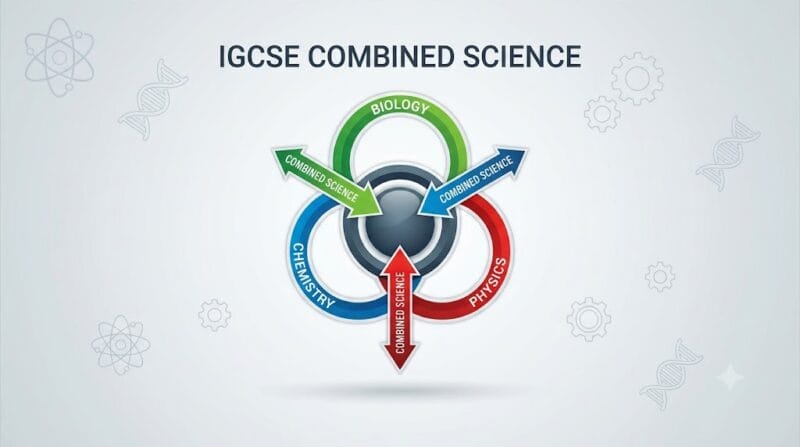
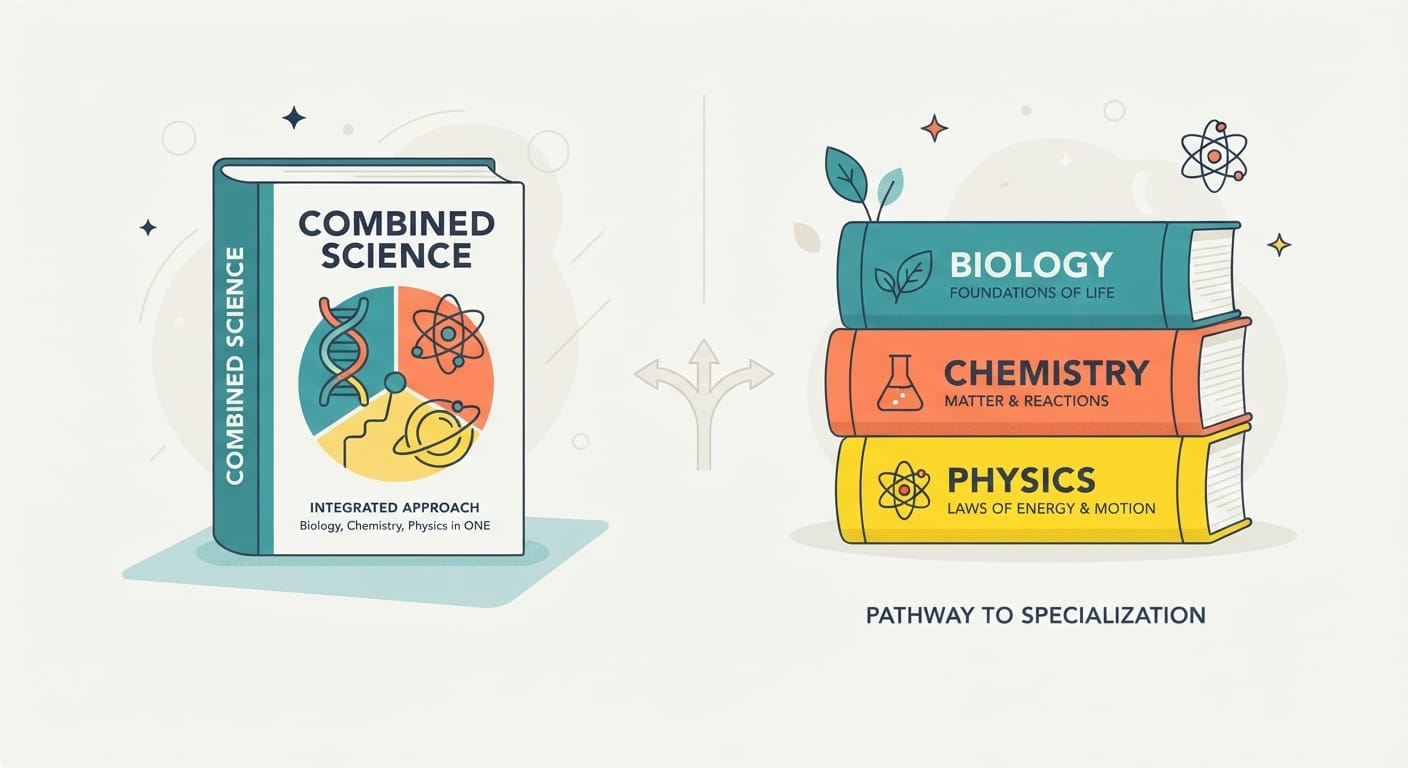
Combined Science gives one overall grade covering Biology, Chemistry and Physics with reduced depth, while Separate Sciences gives three individual grades with full depth in each subject — the core trade-off is breadth and lighter workload versus depth and maximum future flexibility. Neither is universally “better”; the right choice depends on a student’s future plans and how much workload they can realistically manage well.
For Malaysian families weighing this directly, it’s worth first confirming which combinations your own school actually offers, since the choice isn’t meaningful until you know what’s on the table, and Aura Tycoon’s Biology practice is free to browse for a sense of one strand in practice.
What’s the Core Difference?
Combined Science is a single award earning one grade, while Separate Sciences means three independent IGCSE qualifications, each with its own grade, according to Cambridge International’s own guidance distinguishing the Science combinations.
| Combined Science | Separate Sciences | |
| Grades awarded | One overall grade | Three individual grades |
| Depth | Reduced, broad overview | Full depth per subject |
| Workload | Lighter, one qualification | Heavier, three full qualifications |
| Papers | Fewer overall | More overall (two per subject × three) |
Which Suits Students Aiming for Science-Heavy University Courses?
Separate Sciences is generally the safer choice for students likely to pursue Medicine, Engineering, or other Science-heavy degrees, since these paths often expect or effectively require separate Science A Levels, which are more accessible with a Separate Sciences IGCSE foundation.
Which Suits Students With Other Academic Priorities?
Combined Science suits students who want solid, credible Science coverage without dedicating disproportionate time to three full Science subjects, especially if their strongest interests and likely A Level choices lie elsewhere. It remains a genuinely rigorous qualification — it’s narrower, not lesser in academic seriousness.

Is There a Middle-Ground Option Between the Two?
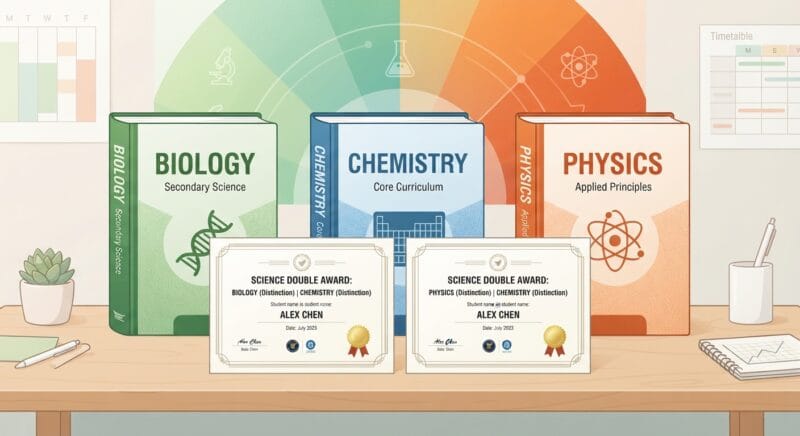
Yes — Co-ordinated Science (Double Award) sits between them, offering broader coverage and two grades without the full three-subject workload of Separate Sciences. It’s worth considering directly if neither Combined Science’s narrower depth nor Separate Sciences’ full workload feels like the right fit.
Free practice tool
Aura Tycoon is a completely free, ad-free learning platform for Cambridge-track students, with chapter videos, quizzes, flashcards, and practice questions built into every topic. It builds the Year 7 Biology, Chemistry and Physics foundation individually, for free, keeping every option genuinely open for longer.
Start Practicing FreeFrequently Asked Questions About Combined vs Separate Sciences
Is Separate Sciences always the better choice?
Not necessarily — it's the safer choice for keeping Science-heavy university pathways open, but it's a heavier workload that may not suit every student's overall subject balance. The right choice depends on individual priorities, not a universal ranking.
How much more work is Separate Sciences compared to Combined Science?
Roughly three times the content and exam papers, since each science is studied and examined independently rather than as one combined overview. This is a genuine time and revision commitment to plan for.
Can a student change from Combined Science to Separate Sciences later?
It's possible but often requires catching up on missed depth, since Combined Science covers less content overall. Raising this with the school early gives more flexibility to make the switch smoothly.
Do both options offer Core and Extended tiers?
Yes, both Combined Science and the individual Separate Sciences offer Core and Extended tiers, with the same grade ceiling rules applying to each subject.
Does Combined Science look worse to universities than Separate Sciences?
Not inherently — many universities accept Combined Science, particularly alongside strong A Level results, though some highly competitive Science courses may prefer or expect Separate Sciences specifically.
Is Co-ordinated Science a good compromise between the two?
Yes, for families wanting more depth than Combined Science without the full workload of Separate Sciences, Co-ordinated Science's double award structure offers a genuine middle ground.
Should a student choose based on their weakest or strongest science?
Neither in isolation — the decision should weigh overall workload capacity and future academic plans more than performance in one specific science. A student can still specialise later even without Separate Sciences, just with potentially more catch-up required.
How do Malaysian schools typically decide which option to offer?
This varies by school, with some offering all three options and others limiting choice based on staffing or student demand. Confirming what's actually available is an essential early step when comparing schools.