Core vs Extended IGCSE Papers: What’s the Difference?
Core and Extended are two tiers of paper offered in several Cambridge IGCSE subjects, most notably Mathematics and the Sciences — Core covers grades C to G, while Extended covers grades A* to E, and this is a hard ceiling, not a preference. A student sitting Core papers cannot achieve above a C for that subject, no matter how well they perform.
For Malaysian parents encountering this choice for the first time, it’s a structural decision that shapes a student’s ceiling for that subject, not just a difficulty setting. Aura Tycoon’s guidance for parents covers more of these Cambridge-pathway decisions. Once tier is understood, choosing the right Science combination is often the next related decision, since Science subjects are commonly tiered too.
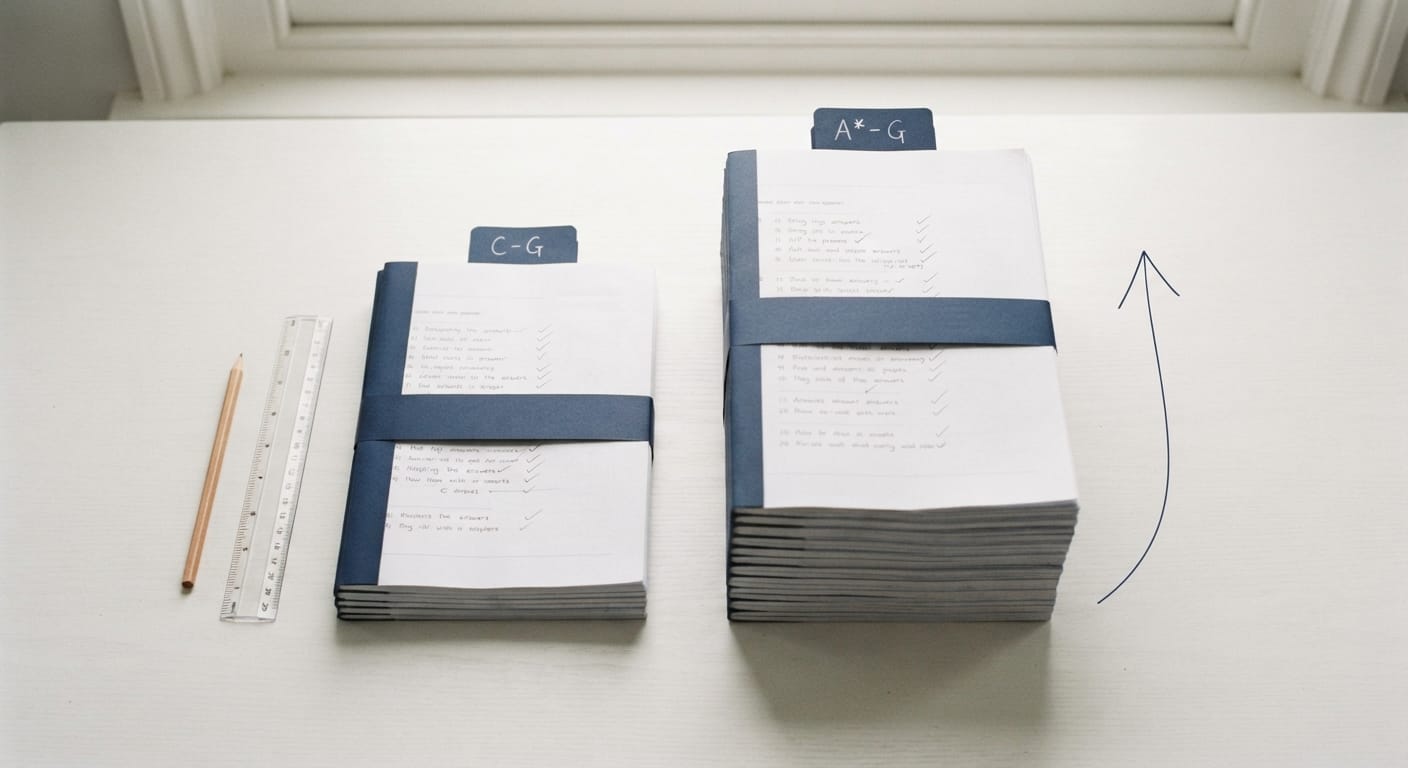
What’s the Actual Difference Between Core and Extended?
The Core curriculum covers a full overview of the subject aimed at students expected to achieve grades C to G, while the Extended curriculum adds a “Supplement” of extra, harder topics on top of the Core content, aimed at students expected to achieve A* to E, according to Cambridge International’s own guidance. Extended isn’t simply “the same paper but harder” — it genuinely includes additional content that Core doesn’t cover at all.
Which Subjects Actually Offer Both Tiers?
Not every IGCSE subject is tiered. The most commonly tiered subjects are:
- Mathematics — Core and Extended papers
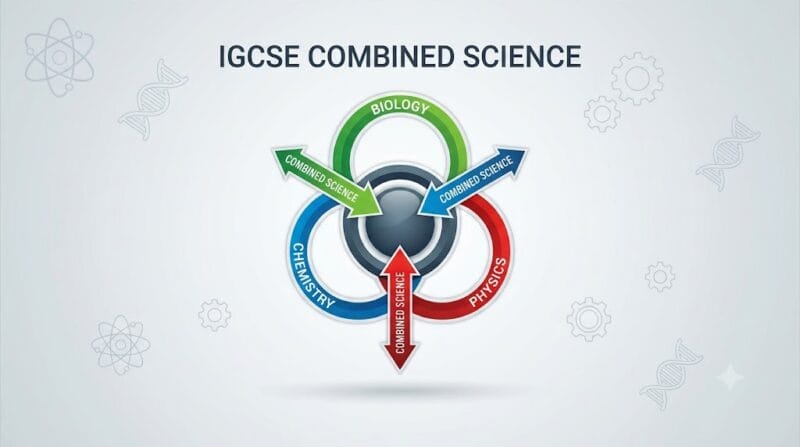
- The Sciences — Biology, Chemistry, Physics, and Combined/Co-ordinated Science
- Some second-language subjects, like English as a Second Language
Many Humanities, Arts, and First Language English subjects use a single paper structure with no tiering at all, so the Core/Extended choice doesn’t apply universally.
Who Decides Whether a Student Sits Core or Extended?
The school typically decides, usually based on ongoing classroom performance and mock exam results, though parents can raise concerns if they feel the tier doesn’t match a student’s genuine ability. If a student is solidly in the middle of the ability range, only the Extended tier gives access to the grades they may actually be capable of — Core simply won’t display that potential on the certificate.
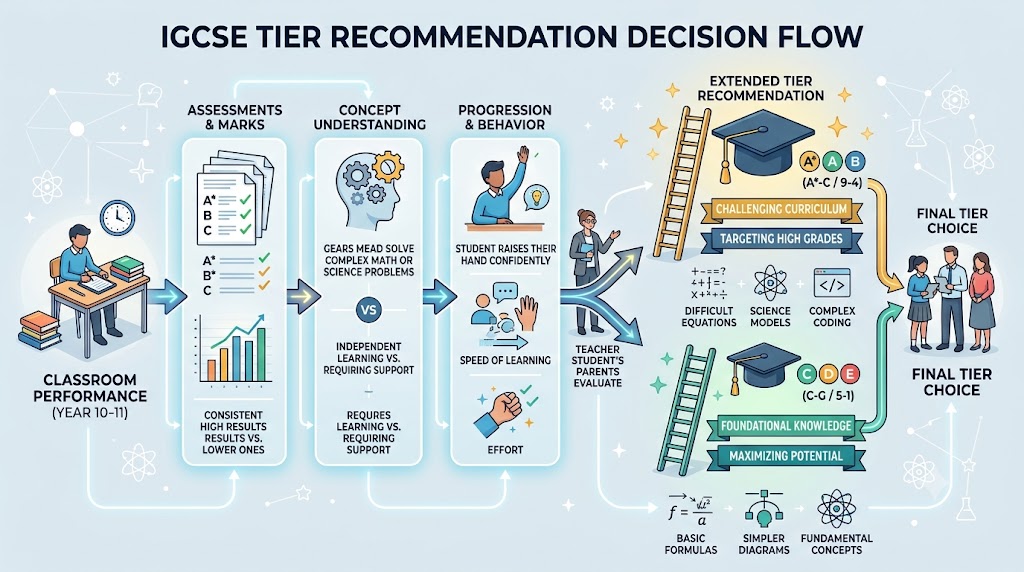
Can a Student Switch Tiers Partway Through the Course?
Switching from Extended down to Core is often possible up to the final exam entry deadline, but switching from Core up to Extended is far harder, since Extended includes additional content the student may not have covered. This asymmetry is worth knowing early — entering Extended and dropping to Core later, if needed, keeps more doors open than starting on Core.
Free practice tool
Aura Tycoon is a free, ad-free learning platform for Cambridge-track students, pairing short chapter videos, quizzes, and flashcards with practice questions and quick games. It offers free Year 7 Biology, Chemistry and Physics practice with every wrong answer logged by topic, well before Core/Extended decisions need to be made.
Start Practicing FreeFrequently Asked Questions About Core vs Extended IGCSE
Can a student get an A* on the Core tier?
No, the maximum achievable grade on Core is a C, regardless of how well a student performs. Only the Extended tier gives access to grades above C.
Is Extended just a harder version of the same Core paper?
Not exactly — Extended includes the full Core curriculum plus additional, more advanced topics not covered on Core at all. It's a genuinely different content scope, not just harder questions on the same material.
How do schools decide which tier a student sits?
Schools generally base this on ongoing classroom performance and mock exam results, aiming to place students where they can achieve their strongest genuine grade. Parents can raise concerns if they feel the placement doesn't reflect their child's ability.
Can a student switch from Core to Extended later in the course?
This is difficult, since Extended includes content the student may not have been taught if they started on Core. Switching from Extended down to Core is generally easier and more common.
Do all IGCSE subjects have Core and Extended tiers?
No, tiering mainly applies to Mathematics, the Sciences, and some second-language subjects. Many other subjects, including most Humanities and Arts, use a single paper structure without tiers.
Does university admission care whether a student took Core or Extended?
Universities primarily look at the grade achieved, though some competitive courses may specify a minimum grade on the Extended tier for certain subjects. Checking specific programme requirements is worthwhile if this matters for a target course.
Is Core tier a sign a student is struggling academically?
Not necessarily — Core is appropriate for students working steadily toward a solid C-grade pass, which is a legitimate and sufficient outcome for many pathways. It isn't inherently a sign of struggle, just a different target range.
When is the Core/Extended decision usually made?
This is typically decided during Year 10, based on performance up to that point, though final exam entries are usually locked in closer to the exam itself. Schools generally communicate their recommendation well before the final entry deadline.