The Pomodoro Technique for Exam Revision
The Pomodoro Technique is a time-management method where you study in focused 25-minute blocks separated by short 5-minute breaks, with a longer break after four blocks. Breaking revision into timed sprints helps sustain concentration and makes long study sessions far less draining.
For Cambridge and IGCSE-track students in Malaysia juggling school, tuition and homework, it’s a simple way to make revision time count without burning out. It manages when you work, not what you study — so it pairs well with a running Weakness Log of your weak topics that tells you what to fill each block with.
How Does the Pomodoro Technique Work?
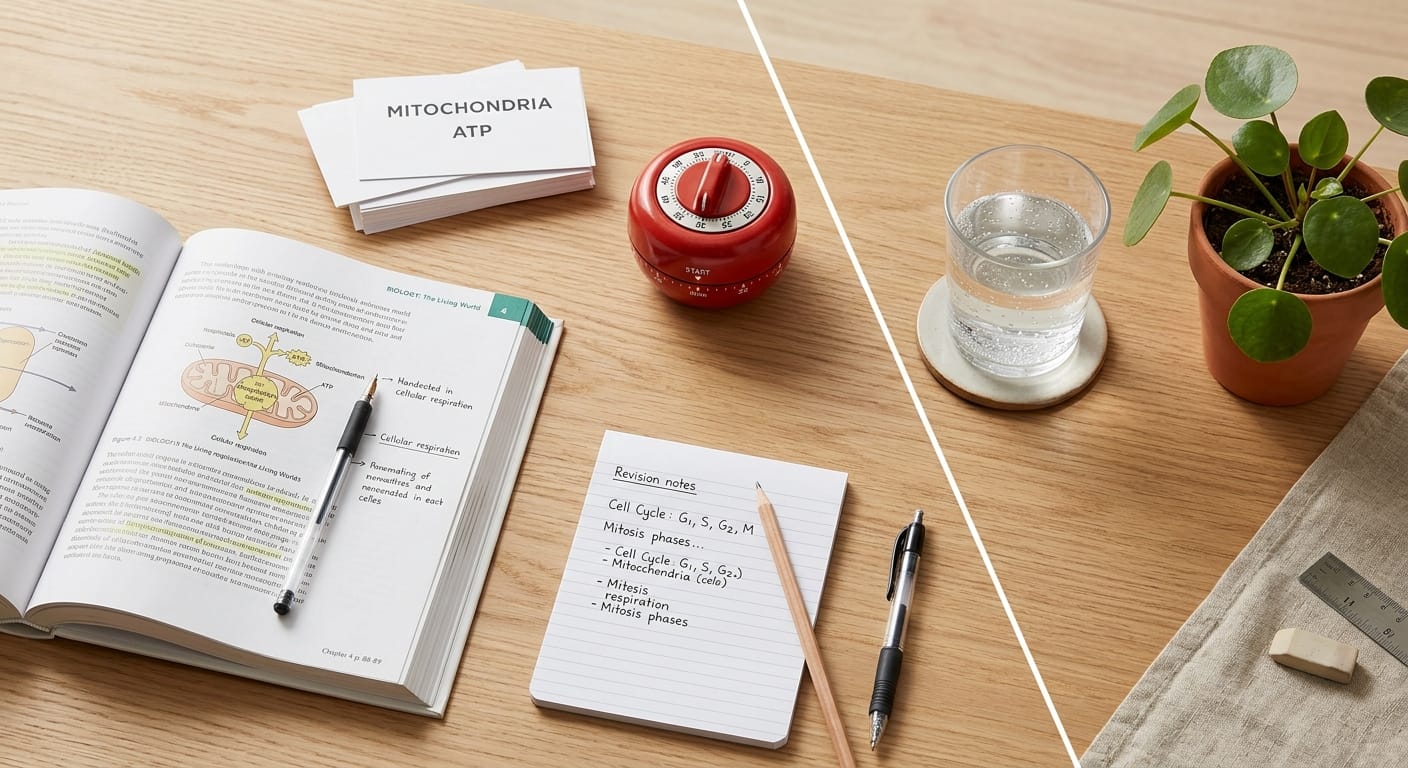
You set a timer for 25 minutes, work on one task with no distractions until it rings, then take a 5-minute break — that single cycle is one “Pomodoro.” After four Pomodoros, you take a longer break of 15 to 30 minutes. The rules are simple: one task per block, no phone during the block, and if a distraction pops into your head, you jot it down and return to it later.
Why Do Short Study Sprints Help?
Short sprints help because focused attention fades over long unbroken sessions, and regular breaks let it recover before it collapses. A fixed 25-minute limit also lowers the barrier to starting — “just one Pomodoro” is easier to begin than “three hours of revision.” Spacing work into shorter sessions across the day also lines up with distributed practice, which a major review of effective learning techniques rates among the most reliable strategies.
How Do You Combine Pomodoro With Active Revision?
Pomodoro manages time, not method — so fill each block with genuinely active work, not passive re-reading:
- One active task per block — a set of past-paper questions, a recall session, or a topic explained from memory.
- Break the topic into blocks — one Pomodoro per sub-topic keeps the goal clear.
- Use breaks to rest, not scroll — stand up, move, look away from screens.
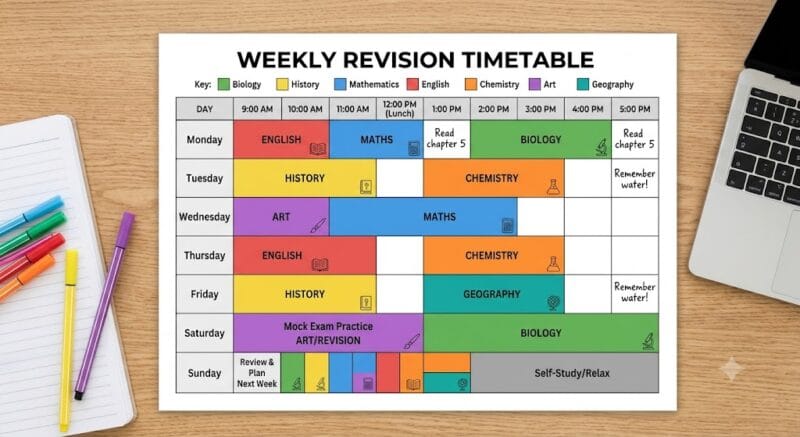
To slot Pomodoros into a wider plan, see fitting focused blocks into a weekly revision timetable.
Is the Pomodoro Technique Good for Every Student?
Not necessarily — some students focus better in slightly longer blocks, and 25 minutes is only a starting point to adjust. It’s also worth remembering that full exam practice needs uninterrupted timed papers, so Pomodoro suits topic revision more than final mock conditions.
Free practice tool
Aura Tycoon is a free learning platform for Cambridge-track students — each chapter combines teaching videos, quizzes, and flashcards with practice questions, all with no ads and no cost. It turns Year 7 Science practice into short sessions with instant feedback, free — an easy fit for a single Pomodoro.
Start Practicing FreeFrequently Asked Questions About the Pomodoro Technique
How long is a Pomodoro study session?
A standard Pomodoro is 25 minutes of focused work followed by a 5-minute break, with a longer break after four cycles. The lengths can be adjusted to suit the student, but the work-then-break rhythm stays the same.
Is the Pomodoro Technique good for exam revision?
Yes, it suits topic revision well by keeping focus high and sessions manageable. For final preparation, though, students should also practise full-length papers under uninterrupted exam timing.
Can I change the 25-minute length?
Yes, 25 minutes is a starting point, not a rule — some students work better with 30 or 45-minute blocks. The key is a fixed focus period followed by a genuine break.
What should I do during Pomodoro breaks?
Rest in a way that recovers attention: stand up, move, get water, or look away from screens. Scrolling on a phone tends to leave you less refreshed than a proper break.
Does the Pomodoro Technique work for Science subjects?
Yes, it works for Biology, Chemistry and Physics, especially when each block is filled with active recall or past-paper practice. It manages time; the study method inside each block does the learning.
How many Pomodoros should I do a day?
That depends on your schedule and energy, but several well-focused blocks with real breaks beat a long unfocused session. Consistency across days matters more than a high daily count.
Is Pomodoro suitable for younger students in Year 7?
Yes, and shorter blocks can work well for younger students who are still building focus. Starting the habit early makes longer, self-directed revision easier later.
Can I use the Pomodoro Technique with tuition homework?
Yes, it works for any focused task, including tuition homework and school assignments. Breaking a big worksheet into blocks with breaks often makes it feel more manageable.