How to Switch From Double Award to Triple Science
Switching from Double Award (Co-ordinated) Science to Triple Science (Separate Sciences) is possible at many schools, particularly earlier in the course, but it typically requires catching up on additional depth the Double Award syllabus didn’t cover, and needs the school’s agreement since it usually means added timetabling and staffing. The earlier this conversation happens — ideally before or very early in Year 10 — the smoother the switch tends to be.
For Malaysian families considering this switch, timing matters as much as the decision itself — knowing the actual IGCSE exam series dates helps calculate exactly how much runway is left to close a content gap before final entries close, since understanding what’s actually gained by switching helps decide whether it’s worth pursuing. Aura Tycoon’s guidance for parents covers more of these process-and-timing questions too.
Why Might a Family Want to Switch?
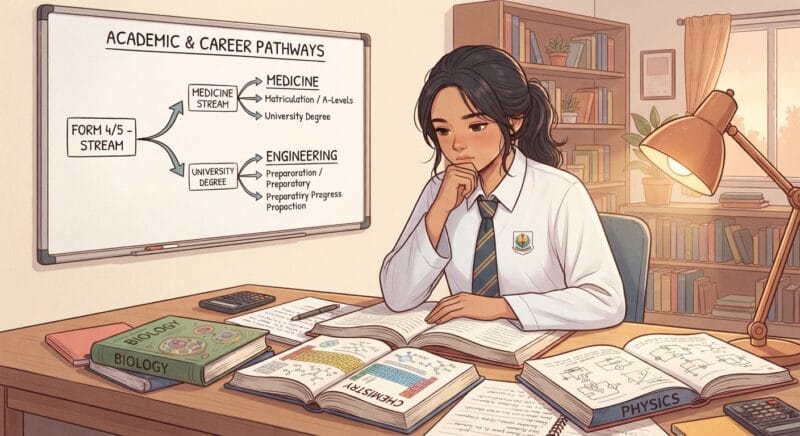
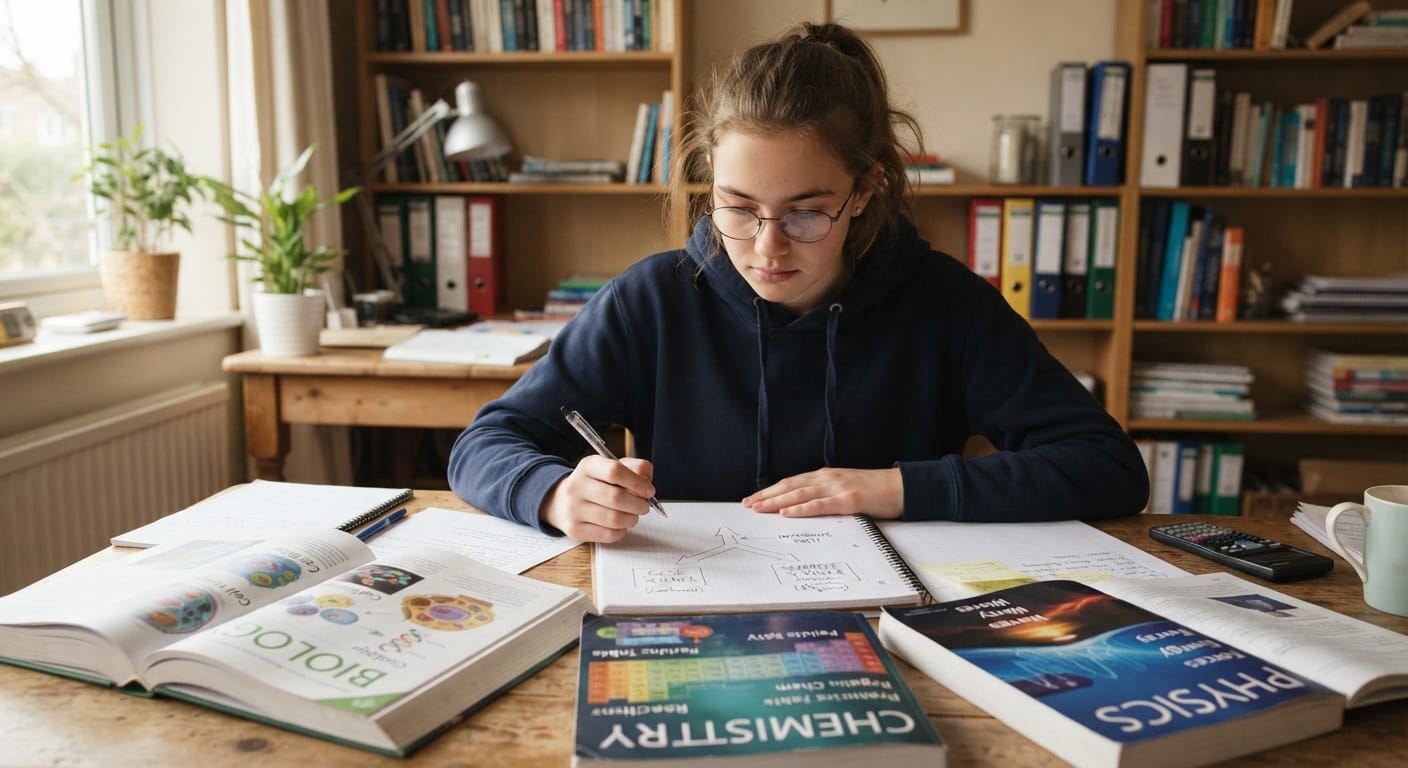
The most common reason is a shift in future plans — a student who started on Double Award Science may later realise they want to pursue Medicine, Engineering, or another Science-heavy pathway that’s more accessible with Separate Science IGCSEs. Because Double Award and Separate Sciences are genuinely different qualifications rather than the same content relabelled, according to Cambridge International’s own guidance on the distinction, switching later really does mean covering genuinely new content, not just resitting. Discovering this partway through Year 10, rather than at the original subject-choice stage, is a common and understandable scenario.
What Does the Switching Process Typically Involve?
The general steps usually include:
- Raising the request with the school — usually starting with the Head of Science or academic office
- Assessing the content gap — since Triple Science covers more depth than Double Award, some catch-up work is often needed
- Confirming timetabling feasibility — Triple Science needs more curriculum time than Double Award, which not every school can accommodate mid-year
- Agreeing a catch-up plan — extra study, tutoring, or summer work to close the gap before exams
How Late Can This Switch Realistically Happen?
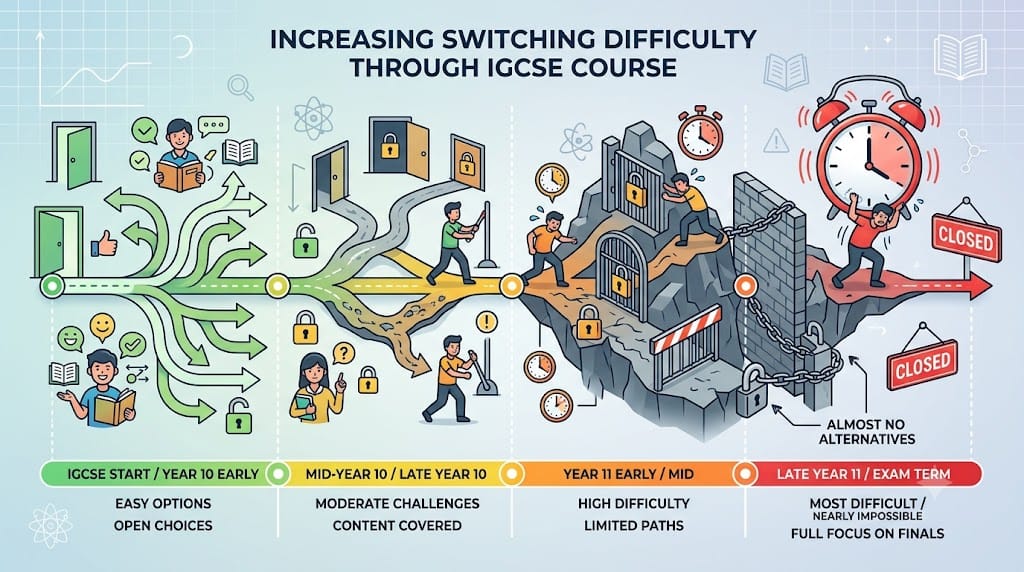
Switching earlier in Year 10, or ideally before it begins, gives the most realistic chance of a smooth transition, since later switches mean less time to close the content gap before final exams. Switching in Year 11, close to the exams themselves, is generally very difficult and often not offered by schools at all, given how much content would need to be covered in a short window.
Is Switching Always Possible?
No — not every school offers Triple Science as an option to switch into, and some schools may not have the staffing or timetabling flexibility to accommodate a mid-course change even if they offer Triple Science to new students. If a school genuinely can’t accommodate the switch, registering the missing Science subject privately alongside school study is sometimes a workable alternative.
Free practice tool
Aura Tycoon is a free, ad-free learning platform for Cambridge-track students, pairing short chapter videos, quizzes, and flashcards with practice questions and quick games. It offers free Year 7 Biology, Chemistry and Physics practice with every wrong answer logged by topic — solid groundwork that supports a switch either way.
Start Practicing FreeFrequently Asked Questions About Switching to Triple Science
Can every school accommodate a switch from Double Award to Triple Science?
No, this depends on the specific school's staffing, timetabling, and policies. Some schools readily support switches, especially early in the course, while others may not be able to accommodate it at all.
How much extra content is involved in switching to Triple Science?
The exact gap depends on how far into the Double Award syllabus the student is, but Triple Science covers meaningfully more depth in each subject, so some catch-up work is typically needed regardless of timing.
Is it better to start on Triple Science than to switch later?
Generally yes, since starting on Triple Science from the beginning avoids the catch-up work a later switch requires. If there's genuine uncertainty at the outset, discussing this with the school before choosing Double Award is worth doing.
What's the latest point a switch can realistically happen?
Earlier is always better, ideally before or very early in Year 10. Switches attempted in Year 11, close to final exams, are generally very difficult and often not offered by schools.
Does switching to Triple Science guarantee stronger university applications?
Not on its own — it removes a potential content-gap obstacle for Science-heavy pathways, but overall grades, A Level choices, and other factors matter just as much for university applications.
What if a school can't accommodate a switch to Triple Science?
Registering the missing Science subject privately, alongside continuing school study, is sometimes a workable alternative when a school genuinely can't accommodate an in-school switch. This adds cost and complexity but keeps the option open.
Does switching to Triple Science affect a student's overall subject workload significantly?
Yes, Triple Science adds meaningfully more content and exam papers compared to Double Award, so the switch should be considered alongside a student's overall subject load, not in isolation.
Should a family discuss a potential switch even if they're not sure they'll need it?
Yes, raising the possibility early with the school, even speculatively, helps clarify what would be involved and how much time is available, without committing to anything immediately.